






What Are the Best Safaris in Kenya? (An Expert’s Guide)

Key Takeaways
– The best safari in Kenya depends on what you want to experience. There is no single ‘best’ destination for everyone. The right one depends on what you want to see, how much space you want and when you can travel.
– Private conservancies offer a more exclusive safari experience. Staying outside busy national parks does not mean missing out on wildlife. It only means fewer vehicles, more flexibility and a deeper connection with the wilderness. You can still visit the famous parks when you want to.– Each region has a different strength. The Maasai Mara is best for big cats, Amboseli for elephants and Kilimanjaro views, Laikipia for rhinos and northern species, and Meru for a quiet, off-the-beaten track safari.
– Luxury is about the experience, not just the accommodation. A comfortable tented camp, expert guides, incredible wildlife access and unforgettable moments in the bush can be just as luxurious as a five-star lodge.
– The quieter seasons can deliver exceptional safaris. Visiting outside peak migration months can mean fewer crowds, dramatic landscapes, excellent photography opportunities and better value, while still offering an amazing experience. The green and shoulder months are some of the best times to go.
Table of Contents
What does the best safari in Kenya really mean for you?
Before recommending a destination, camp or itinerary, I always look at four key factors that shape the overall experience:
#1 Wildlife experiences: What do you want to see and do?
Wildlife is at the heart of every safari, but the experience can vary hugely depending on your priorities.
Many travellers dream of seeing the Big Five — lions, leopards, elephants, rhinos and buffalo — while others want to see specific species only or follow predator behaviour.
And many more people are drawn to Kenya and Tanzania to see the Great Migration.
Ultimately, the best safari is the one that puts you in the right environment for the wildlife experiences you value most.
#2 Do you want to escape the crowds?
The most famous destinations are popular for a good reason, but they can be very busy during peak periods.
On the other hand, private conservancies such as our Porini Camps offer a different style of safari, with controlled vehicle numbers, fewer crowds and more freedom to experience the wilderness at your own pace.
(And it helps that they’re often situated very close to the famous destinations, so you can still access them if you want to.)
#3 How important is conservation and responsible tourism?
Many travellers now want to know that their trip supports something meaningful, whether that means protecting wildlife habitats, supporting local communities or contributing to conservation projects.
Choosing a safari with strong conservation values allows you to experience Kenya’s wilderness while helping protect it for future generations.
#4 What does ‘luxury’ even mean to you?
For some people, luxury means a five-star lodge with elegant interiors, premium amenities and every modern comfort. For others, the greatest luxury is waking up in a comfortable tented camp surrounded by wilderness, with expert guides, incredible wildlife experiences and the freedom to feel completely immersed in nature.
What is the ‘best’ you can expect from Kenya’s top safari destinations?
| Region | Best for | Standout Wildlife | Where we stay |
|---|---|---|---|
|
Maasai Mara |
Classic safari, big cats, migration and savannah birdlife |
Lions, leopards, cheetahs, wildebeest, secretary birds, kori bustards, lilac-breasted rollers and birds of prey |
Porini Lion Camp, Porini Giraffe Camp, Porini Cheetah Camp, Porini Mara Camp, Porini Safari Cottages |
|
Amboseli |
Elephants, Kilimanjaro scenery, wetlands and waterbirds |
Large elephant herds; flamingos when conditions are suitable and other waterbirds |
Porini Amboseli Camp |
|
Laikipia |
Rhinos, Northern species, conservation activities |
Rhinos, wild dogs, Big Five wildlife, diverse dry-country birdlife, raptors and ground-dwelling species |
Porini Rhino Camp |
|
Meru |
Off the beaten track, rhinos, riverine habitats and birdwatching |
Rhinos, reticulated giraffes and elephants, Peter’s finfoot, Pel’s fishing owl and palm-nut vulture |
Rhino River Camp |
Maasai Mara: the best choice for classic African wildlife & big cats

I recommend the Maasai Mara for travellers who want Kenya’s most iconic safari experience, with exceptional Big Cat sightings, open savannah landscapes and the chance to witness the Great Migration.
The Maasai Mara is one of Africa’s most famous wildlife destinations, and for good reason. The reserve’s vast grasslands support large populations of lions, leopards, elephants, buffalo, cheetahs, giraffes, zebras and wildebeest. Between July and October, the Mara National Reserve becomes the setting for one of nature’s greatest spectacles: the Great Wildebeest Migration. Millions of wildebeest and zebras move through the Mara ecosystem, with dramatic river crossings taking place when conditions are right.
I often recommend the Maasai Mara to first-time safari travellers, families and couples who want those classic Kenya safari moments — watching predators on the plains, seeing huge herds of wildlife and experiencing the landscapes they have seen in documentaries.
However, the Mara experience depends greatly on where you stay. During peak migration months, some areas of the Maasai Mara National Reserve can become extremely busy around major wildlife sightings.
For travellers who want the Mara’s incredible wildlife without the crowds, I recommend staying in a private conservancy such as Olare Motorogi Conservancy or Ripoi Conservancy, where you can experience the same Mara ecosystem with fewer vehicles, more space and the added benefits of a private conservancy.
And if Lions are your thing, our Ol Kinyei Conservancy, recognised on the prestigious IUCN Green List of Protected and Conserved Areas, now has the highest lion density in the whole of the Mara.
Birds – The Maasai Mara’s open grasslands and acacia woodlands support a rich variety of birdlife, including secretary birds, kori bustards, lilac-breasted rollers and numerous birds of prey. Birdwatching is rewarding year-round, with migratory species adding to the diversity between November and April.
Amboseli: the best choice for elephant encounters and iconic scenery

I recommend Amboseli for travellers who want unforgettable elephant sightings and incredible photography opportunities in Kenya’s most recognisable landscape.
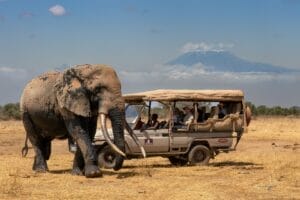
Amboseli National Park is famous for its large elephant herds and dramatic views of Mount Kilimanjaro. The park’s open plains and seasonal wetlands create ideal conditions for wildlife viewing, particularly during dry periods when animals gather around reliable water sources.
Alongside elephants, visitors can see lions, cheetahs, buffalo, giraffes, zebras, wildebeest and a wide variety of birdlife. The combination of wildlife and scenery makes Amboseli one of Kenya’s most rewarding destinations for photographers.
Birds – Amboseli is an excellent destination for birdwatching, with its seasonal swamps, wetlands and open plains attracting a wide range of species. Look out for pelicans, herons, egrets, kingfishers and birds of prey, as well as flamingos when conditions are suitable.
I often recommend Amboseli to first-time safari travellers, families and travellers who want a slower-paced safari focused on scenery and memorable wildlife encounters.
Our Porini Amboseli Camp is located in the Selenkay Conservancy, close to Amboseli National Park . It offers access to the Amboseli ecosystem while providing the quieter atmosphere and exclusivity of a private conservancy.
Laikipia: the best choice for rhinos, conservation & northern species

Choose Laikipia if you want more than a game drive. This region of private conservancies on the slopes of Mount Kenya is one of East Africa’s most important conservation landscapes.
Many Laikipia conservancies are also home to northern Kenya species that are rarely seen in the south, including Grévy’s zebra and reticulated giraffe. Alongside these distinctive species, you can see lions, elephants, buffalo and African wild dogs.
Ol Pejeta Conservancy is the best-known of them. The conservancy is particularly well known for its work protecting endangered black and white rhinos, is home to the last 2 Northern White Rhinos on the planet, while also offering opportunities to see lions, elephants, giraffes, zebras, chimpanzees and wild dogs.
Unlike some of Kenya’s more traditional safari destinations, Ol Pejeta offers a different style of experience. The focus is not only on seeing wildlife, but understanding the conservation efforts that protect these species and the challenges facing them. Ol Pejeta Conservancy is known for its wide variety of activities, including visiting the final two Northern White rhinos, lion tracking, rhino monitoring and dog tracking – making it the go-to safari destination for those seeking something a little extra.
Birds – Laikipia’s varied habitats, from open plains and acacia woodland to riverine forest, support an impressive diversity of birdlife. Birdwatchers can look for raptors, ground-dwelling species and birds associated with Kenya’s drier landscapes.
I often recommend Ol Pejeta to travellers who are passionate about conservation, families looking for an educational safari experience, and guests who want to understand the bigger picture behind Kenya’s wildlife protection efforts.
It is also an excellent choice for travellers looking to combine a classic Kenya safari with something more unique. The Laikipia landscape feels very different from the Maasai Mara, with open plains, views of Mount Kenya and a strong focus on conservation.
Our Porini Rhino Camp is located within Ol Pejeta Conservancy and offers a conservation-focused safari experience with expert guiding, excellent wildlife viewing and close access to one of Kenya’s most important rhino habitats.
Meru: best for a quiet, off-the-beaten-track safari

Choose Meru if you’d rather have the wildlife to yourselves. It feels wild and unspoiled, and it is one of Kenya’s best-kept secrets.
What you can see in Meru:
– Rhinos: both black and white rhino live here, protected within Meru’s dedicated rhino sanctuary. Meru’s rhino story is one of remarkable recovery. Poaching severely depleted the park’s rhino population during the 1970s and 1980s, but sustained protection, habitat restoration and rhino reintroduction have helped transform its fortunes.
– Elephant and buffalo are among Meru’s most prominent large mammals, while hippos are found in its rivers and waterways.
– Northern species: Grévy’s zebra, reticulated giraffe and hartebeest are among the distinctive species found here, reflecting Meru’s position at the meeting point of Kenya’s northern and eastern wildlife regions.
– Predators: lion, cheetah and leopard are all present.
– Birds: Meru’s combination of savannah, riverine forest and wetlands makes it a rewarding destination for birdwatchers, with more than 427 bird species recorded. Along its rivers, look out for Peter’s finfoot, while the elusive Pel’s fishing owl and uncommon palm-nut vulture are among the notable species that make Meru particularly appealing to keen birdwatchers.
The home of Born Free
Meru is closely associated with the story of Joy and George Adamson and Elsa the lioness. The Adamsons raised Elsa from an orphaned cub and successfully returned her to the wild in Meru, where she went on to have cubs. Her story became the basis of Joy Adamson’s bestselling book Born Free and the subsequent film. Elsa’s grave is still marked within the park, close to the site of the Adamsons’ former camp. Nearby is the grave of Pippa, a leopard that Joy Adamson successfully rehabilitated and returned to the wild. Both graves are recognised by Kenya Wildlife Service as historic attractions within Meru National Park.
I often recommend Meru to experienced safari travellers and photographers who’ve been to Kenya before — or anyone who wants to experience a side of Kenya that feels more remote and less familiar.
The wildlife is different, the landscape is striking and the experience feels very distinct from the classic southern Kenya safari. So it’s definitely worth it, if you are able.
Rift Valley Lakes: Best for birdwatching and scenic landscapes

The Great Rift Valley, north-west of Nairobi, is dotted with lakes set against dramatic escarpments, volcanic hills and open grasslands. Lake Elementaita and Lake Nakuru are particularly rewarding for birdwatching, with flamingos, great white pelicans and a variety of waterbirds and migratory species.
Lake Elementaita, surrounded by acacia woodland and open plains, also supports wildlife including zebras, elands and Rothschild’s giraffes. Nearby, Lake Nakuru National Park combines lake scenery with woodland and rocky hills, offering excellent wildlife viewing and a sanctuary for both black and white rhinos.
Other lakes, including Naivasha and Bogoria, offer different experiences, from freshwater birdlife and boat trips to hot springs and striking volcanic scenery.
The lakes work best as a stopover within a longer itinerary where you are combining them with destinations such as Amboseli and the Maasai Mara.
What are the best Kenya safari tours?
A carefully planned combination of camps, conservancies and experiences altogether will create a very rewarding journey.
At Gamewatchers Safaris, you aren’t limited to a single destination. Indeed, we specialise in bespoke multi-stop itineraries across Kenya’s top camps, nearby beach resorts, and neighbouring African countries — crafted entirely around how you want to travel.
Do you need to stay inside a national park for the best safari in Kenya?
No. In fact, staying in a private conservancy will give you a more exclusive safari experience while still allowing you to visit Kenya’s most famous national parks.
Many travellers we speak to initially assume that staying outside a national park means missing out. But in my opinion, Kenya’s most rewarding safari experiences happen in the conservancies, where fewer vehicles, expert guides and greater flexibility all work together to create a much more personal connection with the wilderness.

Good to know:
We have our Porini Camps and Safari cottages, that we run on private conservancies all over Kenya.
At each camp, only:
one tent per 700 acres
and one tourist vehicle per 1,400 acres is permitted
So you are guaranteed that your safari will be much quieter and crowd-free, with closer and more intimate wildlife encounters.
Click here to learn more about our Porini Camps in Kenya.
Here’s why I prefer private conservancies over national parks:
National parks have strict rules, including even curfews. One of the main restrictions is that vehicles must return to camp or lodge by around 6:00 PM, meaning evening wildlife viewing ends just as many animals are becoming more active.
In a private conservancy, you can enjoy some of my absolute favourite things about a safari. Including:
– Night game drives, where you can search for nocturnal wildlife such as leopards, lions and hyenas after sunset using spotlights
– Off-road tracking
– As much time as you want to stay with an animal and take it all in
You will also be accompanied by highly experienced local guides and trackers who know the landscape, understand animal behaviour and spend their lives learning the movements of the wildlife around them.
Most of our guides even know the animals by name and have grown up alongside them. In fact, this is the single most important difference in my opinion.
Important:
Staying in a private conservancy does not mean missing out on Kenya’s famous national parks. You don’t have to choose one or the other — you can have both!
Many of our Porini Camps are located on private conservancies that sit directly alongside Kenya’s most famous parks and reserves, so you enjoy both experiences. In fact, if you wish it, we can easily plan excursions into the national parks and back again. And in the peak season, we even include this in our packages.
This will give you the best of both worlds.
Even if it’s crowded in the national parks, you can enjoy the sights and then return to the peaceful nature of the conservancy after.
Do you need to visit during migration season for the best safari in Kenya?
No. The Great Migration is every bit as amazing as it sounds, but there’s lots to do all year round. It’s not even my favourite time of the year to go. The green season and the shoulder months are also amazing.
The green season is my personal favourite. The landscapes are lush with thick, wet grass. And there’s often a dramatic dark cloud looming over the sky, and there’s a certain light that makes it excellent for photography.
True it rains more during the green season. But most of the time the rain is heavy but short-lived. But the green season is also the time lots of animals give birth, which coincides equally with more predator activity, as big cats try to take advantage of the situation.
I think you get some of the best wildlife experiences after the rains. There is also the added benefit that it’s a lower cost to travel outside of peak season. If you were to book a 7 day safari at our Porini Camps for example, you could save $2,000 per person (Price comparison based on travel in June 2027 & travel July-September 2027).
Read more here:
Important
The weather is less predictable than it used to be, so I never promise specific conditions. However, the beauty of our Porini Camps is that we can often work around the weather. Rain also brings out the very best from our experienced guides, who often are able to demonstrate a remarkable ability to still navigate those conditions and track animals safely.
What are the absolute must-do experiences for the best Kenya safari?
I was born in Kenya and have visited countless times, and am lucky to say I have experienced lots of different safari experiences there. But all my favourite memories are those ‘slower’ moments. They are:
– Early morning game drives, where you head out at first light while the bush is waking up and animal activity is often at its highest (the sun isn’t really hot in the morning, which invites them out).
– Evening drives, where you can see and hear nocturnal predators and smaller species that are rarely active during the day.
– Observing in awe an experienced guide from a local community as they reveal the landscape, along with all of its sights and sounds, to you.
– And then there are the simple moments that stay with you. From bush breakfasts to sundowners, and watching the stars from around the campfire, enjoying the quiet of the bush and realising just how far away you are from everyday life.
– I just love the feeling of the wild space, the space and the huge landscapes. When you’re in Africa, the sky is massive, the views are massive, everything feels huge. And you’re left with that real sense that you’re actually really, really tiny in this huge, great universe.
These are all experiences that are best observed on a private conservancy. I’m not saying you won’t be able to get them anywhere else. But the feeling is insurmountable when you’re deep in the wilderness, away from the crowds.
Conclusion: So, what is the best safari to do in Kenya?
The best safari in Kenya is not about finding one perfect destination. It’s about choosing the experience that matches what you want from your journey.
By understanding the differences between destinations, the seasons, national parks and private conservancies, you can plan for a safari that feels truly personal. With the right wildlife experiences, the right level of comfort and the right pace for you.
Just imagine waking up in the wilderness knowing every part of your itinerary has been designed around what matters most to you. That’s what we specialise in and do every day for our customers at Gamewatchers Safaris.
Still not sure which Kenya safari is best for you?
Tell us what you would most like to see, how many days you have and when you’re travelling. Our safari specialists can recommend the right combination of camps, conservancies and itineraries to create an experience designed entirely around your interests.

Author: Robyn Beattie
Born in Kenya and raised in the UK, Robyn has spent much of her life returning to Kenya and travelling extensively throughout the country and across Africa. With more than 15 years’ experience in the safari industry, she has extensive knowledge of Kenya and first-hand experience of every Porini Camp, complemented by extensive travel throughout Africa.
You can contact Robyn on her work email at: robyn@gamewatchers.com