






‘Gamewatchers is an exclusive tour company that specializes in delivering tailored safaris to small camps and lodges in Africa. We are committed to helping preserve Africa’s unique wildlife, landscapes and local communities. We believe that the best way to do this is through sustainable ecotourism ventures that benefit the local communities and give our guests a rewarding experience.
Our Porini group of camps is a sustainable model that practically implements these principles. We are dedicated to providing our clients with exemplary personalized service and strive to have them leave as friends.’
These environmentally-friendly Eco-Camps have been established in exclusive Wildlife Conservancies and are carefully managed to ensure that local communities, the environment and visitors benefit from our Conservancy concept.
For more than three decades, Gamewatchers Safaris & Porini Camps have been at the forefront of community-led wildlife conservation in Kenya. Through long-standing partnerships with local landowners, we support biodiversity protection and community development across the conservancies where we operate. Our low-impact tourism model ensures meaningful benefits for wildlife, neighbouring communities and the guests who stay with us.
Tourism revenue is what keeps these conservancies viable, so choosing to experience a safari at our Porini Camps directly contributes to safeguarding habitats and supporting the families who have set aside their land for wildlife.


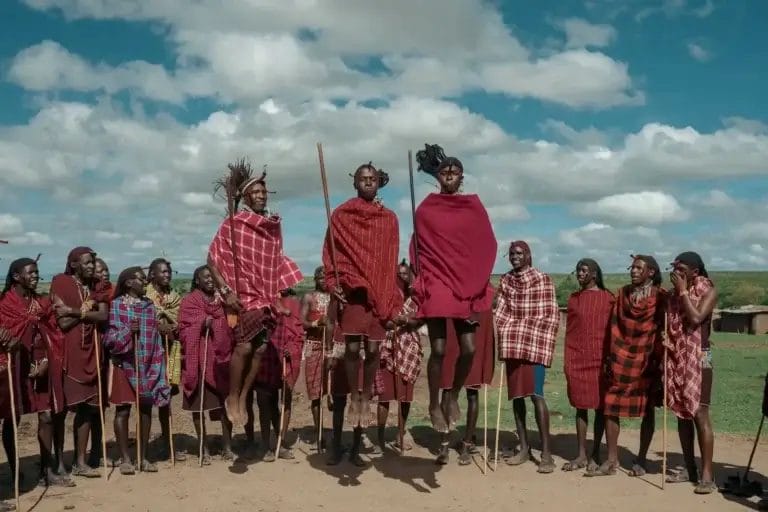


For more than three decades, Gamewatchers Safaris & Porini Camps have been at the forefront of community-led wildlife conservation in Kenya. We pioneered the Conservancy Concept with the first Community Conservancy in 1997 in Selenkay, closely followed by Ol Kinyei in 2005.

Our aim is to work closely with communities living alongside national parks and wildlife reserves to help them derive benefits from conserving wildlife species and the indigenous habitat. They are able to earn an income from eco-tourism from monthly rental payments for setting aside areas of their land as wildlife conservancies, thereby creating wildlife dispersal areas outside the parks, increasing wildlife numbers and species variety, habitat and bio-diversity. We give priority to the family members of the local community for all job opportunities in the conservancies and our small camps so that they can earn livelihoods from being closely involved in our eco-tourism activities.
In our view, the key to conserving Kenya’s spectacular flora and fauna outside the parks is to engage the local communities and to provide tangible benefits from eco-tourism that exceed the returns that they are able to generate from any other form of land utilization such as farming. We have succeeded in making wildlife pay its way in the areas where we operate and we take every opportunity to share our experience with others interested in setting up conservancies.

Our aim is to work closely with communities living alongside national parks and wildlife reserves to help them derive benefits from conserving wildlife species and the indigenous habitat. They are able to earn an income from eco-tourism from monthly rental payments for setting aside areas of their land as wildlife conservancies, thereby creating wildlife dispersal areas outside the parks, increasing wildlife numbers and species variety, habitat and bio-diversity. We give priority to the family members of the local community for all job opportunities in the conservancies and our small camps so that they can earn livelihoods from being closely involved in our eco-tourism activities.
In our view, the key to conserving Kenya’s spectacular flora and fauna outside the parks is to engage the local communities and to provide tangible benefits from eco-tourism that exceed the returns that they are able to generate from any other form of land utilization such as farming. We have succeeded in making wildlife pay its way in the areas where we operate and we take every opportunity to share our experience with others interested in setting up conservancies.
The concept of wildlife conservancies in Kenya was devised as a means to address the escalating issue of lost indigenous habitat and the resulting impact on the country’s unique wildlife. Division of land, over-grazing and intensive farming were increasing, as was conflict between landowners and wildlife. As examples:
Our unique, award-winning Conservancy projects have gone a long way in bringing long-term benefits to local communities whilst also protecting the land and wildlife and ensuring an enhanced wilderness experience for guests to our Porini Camps.

The concept of wildlife conservancies in Kenya was devised as a means to address the escalating issue of lost indigenous habitat and the resulting impact on the country’s unique wildlife. Division of land, over-grazing and intensive farming were increasing, as was conflict between landowners and wildlife. As examples:
Our unique, award-winning Conservancy projects have gone a long way in bringing long-term benefits to local communities whilst also protecting the land and wildlife and ensuring an enhanced wilderness experience for guests to our Porini Camps.
In 1997 we signed an agreement with a Maasai community to establish the first Conservancy (Selenkay) on 13,000 acres of their land in the Amboseli eco-system. Following the success of Selenkay Conservancy, in 2005 we set up the Ol Kinyei Conservancy in the Mara eco-system which was initially 8,000 acres and later expanded to 18,700 acres. This was the first conservancy of its kind in the Mara based on our concept of land being leased and set aside as a conservancy exclusively for wildlife, with no human settlement, and using our formula of a minimum of 700 acres of conservancy for every guest tent and a maximum of 12 tents for any one safari camp, to ensure a low-impact form of tourism. Then in 2006 we were involved with others in setting up the 22,000 acre Olare Orok Conservancy (OOC) in another part of the Mara.
Ol Kinyei Conservancy and OOC were followed by the establishment of two more conservancies in the Mara: the 11,000 acre Motorogi Conservancy and the 50,000 acre Naboisho Conservancy. The Olare Orok Conservancy and Motorogi Conservancy were then re-named to Olare Motorogi Conservancy as the two conservancies are adjacent and managed as one entity of 33,000 acres.
The areas to be used as conservancies were chosen by the Maasai landowners and then were vacated by the community and set aside for wildlife so that they could be leased out as conservancies and utilised for eco-tourism to generate an income and economic benefits for the local community.

In 1997 we signed an agreement with a Maasai community to establish the first Conservancy (Selenkay) on 13,000 acres of their land in the Amboseli eco-system. Following the success of Selenkay Conservancy, in 2005 we set up the Ol Kinyei Conservancy in the Mara eco-system which was initially 8,000 acres and later expanded to 18,700 acres. This was the first conservancy of its kind in the Mara based on our concept of land being leased and set aside as a conservancy exclusively for wildlife, with no human settlement, and using our formula of a minimum of 700 acres of conservancy for every guest tent and a maximum of 12 tents for any one safari camp, to ensure a low-impact form of tourism. Then in 2006 we were involved with others in setting up the 22,000 acre Olare Orok Conservancy (OOC) in another part of the Mara.
Ol Kinyei Conservancy and OOC were followed by the establishment of two more conservancies in the Mara: the 11,000 acre Motorogi Conservancy and the 50,000 acre Naboisho Conservancy. The Olare Orok Conservancy and Motorogi Conservancy were then re-named to Olare Motorogi Conservancy as the two conservancies are adjacent and managed as one entity of 33,000 acres.
The areas to be used as conservancies were chosen by the Maasai landowners and then were vacated by the community and set aside for wildlife so that they could be leased out as conservancies and utilised for eco-tourism to generate an income and economic benefits for the local community.
A monthly rental (that increases annually) is paid to the Maasai landowners as a lease for all the land in the conservancies and the company give first priority to family members of the local community for jobs in the camps and conservancies so that over 95% of the staff are drawn from the local people whose parcels of land have been joined together to form the different conservancies. In addition we have this year started payments to the Karamajong at the new Kidepo Lomej Conservancy adjacent to the Kidepo National Park in Uganda.
There are over 5,000 Maasai families who are directly benefiting from the conservancies which we are involved in leasing and managing. Their lives have improved with a guaranteed income from the lease and less reliance on livestock as their sole income source while many have members of their families earning a livelihood in the conservancies in which they have a stake.
Previously, opportunities for jobs were almost non-existent, especially at Selenkay, but Gamewatchers Safaris & Porini Camps now employ over 300 members of staff from the communities. Take-home earnings of individual staff members are over USD150 per month for the most junior staff which is significantly higher than average in rural areas. Thus the conservancies have provided a solution to the problem of the lack of job opportunities by providing additional incomes to housholds and alternative livelihood opportunities to livestock ranching.

A monthly rental (that increases annually) is paid to the Maasai landowners as a lease for all the land in the conservancies and the company give first priority to family members of the local community for jobs in the camps and conservancies so that over 95% of the staff are drawn from the local people whose parcels of land have been joined together to form the different conservancies. In addition we have this year started payments to the Karamajong at the new Kidepo Lomej Conservancy adjacent to the Kidepo National Park in Uganda.
There are over 5,000 Maasai families who are directly benefiting from the conservancies which we are involved in leasing and managing. Their lives have improved with a guaranteed income from the lease and less reliance on livestock as their sole income source while many have members of their families earning a livelihood in the conservancies in which they have a stake.
Previously, opportunities for jobs were almost non-existent, especially at Selenkay, but Gamewatchers Safaris & Porini Camps now employ over 300 members of staff from the communities. Take-home earnings of individual staff members are over USD150 per month for the most junior staff which is significantly higher than average in rural areas. Thus the conservancies have provided a solution to the problem of the lack of job opportunities by providing additional incomes to housholds and alternative livelihood opportunities to livestock ranching.
The monetary benefits to the communities generated from payments by Gamewatchers Safaris from each of the Conservancies where we are involved exceeded a total of 1 million dollars in each of the 6 years between 2014 and 2019. In 2020, owing to the massive disruption of tourism by the Covid pandemic, the incomes halved to a total of just under $750,000 but this was a considerably better result than might have been expected. From 2022 the numbers increased significantly with 2025 generating over US$2.5 million, all from guests choosing to book and enjoy a safari staying in the Porini Camps.
Selenkay Conservancy: total cash flowing into community from the conservancy project:
2025: $423,178 2024: $351,662 2023: $308,359
Ol Kinyei Conservancy: total cash flowing into community from conservancy project:
2025: $1,086,684 2024: $717,121 2023: $669,780
Olare Motorogi Conservancy: our contribution to the conservancy project:
2025: $478,063 2024: $350,231 2023: $426,727
Mara Ripoi Conservancy: our contribution to the conservancy project:
2025: $333,326 2024: $274,
The income per hectare exceeds income from small-scale cultivation and is particularly high in Selenkay which is a semi-arid area.
Our projects are able to generate a cash flow of US$2.5 Million per year directly into the local communities, increasing annually with no direct financial expense to them for the operating costs of the conservancies (infrastructure such as water-holes or roads and wages for wardens and rangers as well as other running costs). We have also provided employment opportunities to the Amboseli and Mara communities in our other camps in Ol Pejeta Conservancy, Meru and Nairobi.

The monetary benefits to the communities generated from payments by Gamewatchers Safaris from each of the Conservancies where we are involved exceeded a total of 1 million dollars in each of the 6 years between 2014 and 2019.
In 2020, owing to the massive disruption of tourism caused by the Covid pandemic, the incomes for the communities from the conservancies halved to a total of just under $750,000 but this was a considerably better result than might have been expected. As tourism numbers return, we have seen the income streams going into the communities rising to over $900,00 in 2021 and exceeding US$1.3 million in 2022 and over US$1.5 million in 2023.
Selenkay Conservancy: total cash flowing into community from the conservancy project:
2023: $293,816, 2022: $333,679, 2021: $ 194,816, 2020: $172,656, 2019: $390,703, 2018: $352,100,
2017: $300,300, 2016:$343,000, 2015: $259,000, 2014: $235,000
Ol Kinyei Conservancy: total cash flowing into community from conservancy project:
2023: $640,287, 2022: $ 646,107, 2021: $397,175, 2020: $322,991, 2019: $639,950, 2018: $566,840,
2017: $ 501,300, 2016: $457,000, 2015: $412,000, 2014: $400,000
Olare Motorogi Conservancy: our contribution to the conservancy project:
2023: $426,727, 2022: $ 382,607, 2021: $ 226,690, 2020: $232,943, 2019: $461,159, 2018: $371,000,
2017: $332,100, 2016: $331,800, 2015: $291,000, 2014: $380,000
Ripoi Conservancy: our contribution to the conservancy project:
2023: $210,924
The income per hectare exceeds income from small-scale cultivation and is particularly high in Selenkay which is a semi-arid area. Our projects are able to generate a cash flow of over US$1.3 Million per year directly into the local communities, increasing annually ( $1,449,180 in 2022), with no direct financial expense to them for the operating costs of the conservancies (infrastructure such as water-holes or roads and wages for wardens and rangers as well as other running costs). We have also provided employment opportunities to the Amboseli and Mara communities in our other camps in Ol Pejeta Conservancy, Meru and Nairobi National Park which totalled US$77,530 in 2023.
The monetary benefits to the communities generated from payments by Gamewatchers Safaris from each of the Conservancies where we are involved exceeded a total of 1 million dollars in each of the 6 years between 2014 and 2019. In 2020, owing to the massive disruption of tourism by the Covid pandemic, the incomes halved to a total of just under $750,000 but this was a considerably better result than might have been expected. From 2022 the numbers increased significantly with 2025 generating over US$2.5 million, all from guests choosing to book and enjoy a safari staying in the Porini Camps.
Selenkay Conservancy: total cash flowing into community from the conservancy project:
2025: $423,178 2024: $351,662 2023: $308,359
Ol Kinyei Conservancy: total cash flowing into community from conservancy project:
2025: $1,086,684 2024: $717,121 2023: $669,780
Olare Motorogi Conservancy: our contribution to the conservancy project:
2025: $478,063 2024: $350,231 2023: $426,727
Mara Ripoi Conservancy: our contribution to the conservancy project:
2025: $333,326 2024: $274,
The income per hectare exceeds income from small-scale cultivation and is particularly high in Selenkay which is a semi-arid area.
Our projects are able to generate a cash flow of US$2.5 Million per year directly into the local communities, increasing annually with no direct financial expense to them for the operating costs of the conservancies (infrastructure such as water-holes or roads and wages for wardens and rangers as well as other running costs). We have also provided employment opportunities to the Amboseli and Mara communities in our other camps in Ol Pejeta Conservancy, Meru and Nairobi.
The Porini Camps, situated inside the private Conservancies, are small eco-friendly tented camps that accommodate a maximum of 20 guests. The camps each consist of just 6 to 10 spacious tents in beautiful natural settings under acacia trees.
Porini guests benefit from an authentic safari experience on exclusive game-filled land, away from the crowds of tourists in the National Parks and Reserves. Game drives are with professional safari guides in 4×4 vehicles. Guests enjoy escorted walks with Maasai warriors and can search for nocturnal species on exhilarating night game drives – unlike in the government-run National Parks where these are not permitted.
The income from the camps is used to manage and improve the conservancies, pay the lease and tourist entry fees and pay salaries of the camp staff and the conservancy rangers and workers.

The Porini Camps, situated inside the private Conservancies, are small eco-friendly tented camps that accommodate a maximum of 20 guests. The camps each consist of just 6 to 10 spacious tents in beautiful natural settings under acacia trees.
Porini guests benefit from an authentic safari experience on exclusive game-filled land, away from the crowds of tourists in the National Parks and Reserves. Game drives are with professional safari guides in 4×4 vehicles. Guests enjoy escorted walks with Maasai warriors and can search for nocturnal species on exhilarating night game drives – unlike in the government-run National Parks where these are not permitted.
The income from the camps is used to manage and improve the conservancies, pay the lease and tourist entry fees and pay salaries of the camp staff and the conservancy rangers and workers.
Our partnership with the local communities in setting up the conservancies has made a significant contribution to improving conservation of the wildlife and habitat of these areas.
Within just a short time of conception each conservancy saw a significant increase in wildlife numbers and a regeneration of vegetation in areas that were previously over-grazed by livestock. At Selenkay, elephants returned after an absence of twenty years and in the Mara conservancies the number of lions increased very quickly with several residential prides totalling over 120 lions in an area of 100,000 acres, while breeding cheetah took up residence in addition to an influx of other species.
Today, the conservancies support a broad range of species in a protected environment that has returned to its natural state. Wildlife enters the conservancies from the busy neighbouring National Parks where tourist / visitor numbers are not regulated.
As a result of the communities receiving direct benefits from wildlife there has been a change in attitude towards the concept of wildlife conservation. The community members have given their positive support to conservation and there is no snaring or harassing of wildlife within the three conservancies. The members see the wildlife as a resource which belongs to them and are enthusiastic about encouraging wildlife to move into their conservancies. They also recognize the vast improvement in vegetation and grass cover within each conservancy which is now a valuable source of controlled grazing for livestock during severe drought periods.

Our partnership with the local communities in setting up the conservancies has made a significant contribution to improving conservation of the wildlife and habitat of these areas.
Within just a short time of conception each conservancy saw a significant increase in wildlife numbers and a regeneration of vegetation in areas that were previously over-grazed by livestock. At Selenkay, elephants returned after an absence of twenty years and in the Mara conservancies the number of lions increased very quickly with several residential prides totalling over 120 lions in an area of 100,000 acres, while breeding cheetah took up residence in addition to an influx of other species.
Today, the conservancies support a broad range of species in a protected environment that has returned to its natural state. Wildlife enters the conservancies from the busy neighbouring National Parks where tourist / visitor numbers are not regulated.
As a result of the communities receiving direct benefits from wildlife there has been a change in attitude towards the concept of wildlife conservation. The community members have given their positive support to conservation and there is no snaring or harassing of wildlife within the three conservancies. The members see the wildlife as a resource which belongs to them and are enthusiastic about encouraging wildlife to move into their conservancies. They also recognize the vast improvement in vegetation and grass cover within each conservancy which is now a valuable source of controlled grazing for livestock during severe drought periods.
Our project is unique as it doesn’t depend upon donor funding. It is a partnership between the local community and a commercial safari operator, where both parties’ goals are aligned. We believe that one of the keys to our success is recognizing that the community must derive fair benefits and not be taken advantage of.
Important aspects include taking the time to explain the goals of the project, how conservation and ecotourism can benefit them and their children and helping to set some realistic expectations. In establishing the Conservancies a long period was required for meetings, discussions and spending time together, in order to build trust between the local community and us.

Our project is unique as it doesn’t depend upon donor funding. It is a partnership between the local community and a commercial safari operator, where both parties’ goals are aligned. We believe that one of the keys to our success is recognizing that the community must derive fair benefits and not be taken advantage of.
Important aspects include taking the time to explain the goals of the project, how conservation and ecotourism can benefit them and their children and helping to set some realistic expectations. In establishing the Conservancies a long period was required for meetings, discussions and spending time together, in order to build trust between the local community and us.
Our conservancy projects are internationally acknowledged as very successful examples of a tour operator working together with local communities and wildlife to produce a unique experience for visitors. We have won many prestigious awards and accolades including Selenkay Conservancy winning the Worlds Leading Conservation Programme 2025 in the Sustainable Tourism Awards, ATTA® Earthkeepers Award & ATTA® Eco-Innovation Award 2026, Trip Advisor Travellers Choice Award 2026, GOLD Eco-Tourism Award, and World Travel Awards.
We are delighted to see that the success we have had with our initial conservancies has been noted by other tour operators and there is now a real momentum towards more conservancies being set up along similar lines. Having a successful model makes the setting up of future projects simpler for all those interested. We believe that conservancies, like ours, where the local communities are deriving a benefit from eco-tourism that is greater than other forms of land utilization is the way forward for Conservation in Kenya and one that can be duplicated in other parts of Africa.

Our conservancy projects are internationally acknowledged as very successful examples of a tour operator working together with local communities and wildlife to produce a unique experience for visitors. We have won many prestigious awards and accolades including Selenkay Conservancy winning the Worlds Leading Conservation Programme 2025 in the Sustainable Tourism Awards, ATTA® Earthkeepers Award & ATTA® Eco-Innovation Award 2026, Trip Advisor Travellers Choice Award 2026, GOLD Eco-Tourism Award, and World Travel Awards.
We are delighted to see that the success we have had with our initial conservancies has been noted by other tour operators and there is now a real momentum towards more conservancies being set up along similar lines. Having a successful model makes the setting up of future projects simpler for all those interested. We believe that conservancies, like ours, where the local communities are deriving a benefit from eco-tourism that is greater than other forms of land utilization is the way forward for Conservation in Kenya and one that can be duplicated in other parts of Africa.
At Gamewatchers Safaris, Responsible Tourism is at the heart of everything we do.
We welcome questions, ideas and feedback about our conservation, community and environmental practices.