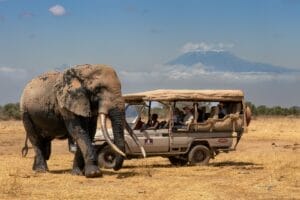







What Is the Cost of a Safari in Kenya (and What Separates a Standard Safari From a Remarkable One)?

Key Takeaways
– Safari prices are not directly comparable. A cheaper quote may exclude park fees, conservancy fees, transfers, flights, drinks or activities that are included elsewhere.
– The real value of a safari is the experience behind the price. Guiding, location, wildlife access, privacy and flexibility can matter more than the standard of the room.– Flying between camps costs more but saves valuable safari time. For shorter itineraries, it can mean more time with wildlife and less time travelling by road.
– Private conservancies usually cost more but offer greater freedom and exclusivity. Off-road drives, night drives, fewer vehicles and longer wildlife sightings can make the experience very different from a National Reserve.– Luxury is not just about expensive accommodation. For me, the real luxury is space, excellent guiding, private conservancies and the freedom to experience wildlife without crowds.
– Always check exactly what your safari price includes before booking. Knowing the full cost upfront makes it much easier to judge value and avoid unexpected extras.
Table of Contents
The surface-level price of a Kenyan safari alone doesn’t tell you much until you know what’s actually included.
When people ask me ‘how much is a safari in Kenya?’, I like to reframe the question. I think the more useful question is: what value are you getting for that price?
There are huge differences that will completely change your experience of Kenya. From the accommodation to the location, quality of guiding, vehicle arrangements, activities, down to how you’ll be expected to travel between destinations.
That is why I do not think safaris should be compared on headline price alone.
In this guide, I’ll explain what you can expect at each spending level/budget you have and, more importantly, what you are actually paying for as the price rises.
So let’s start with the real costs behind a Kenya safari:
At a glance: What is the real cost of a Kenya safari beyond the headline price?
You will sometimes see Kenyan budget safaris advertised from around $150 to $300 per person per day, but these are often ‘land-only’ prices. These prices don’t include domestic flights, park or conservancy fees, private transfers, activities — or anything else, for that matter.
At our Porini Camps, all of our prices are final and all-inclusive. That’s not to say all tour operators in a luxury price band will offer everything included, so make sure you double-check with them.
| Spending plan | Typical price | What to expect |
|---|---|---|
|
Budget safari |
$150–$300 per person, per day |
Shared overland transport, group tour dynamics, simpler budget camping and more basic inclusions |
|
Mid-Range safari |
$300–$600 per person, per day |
Comfortable tented camps, often with 4×4 transport and a more personalised experience |
|
Luxury safari |
$600–$1,500+ per person, per day |
High-quality camps or luxury lodges, all-inclusive pricing and often fly-in safaris/travel |
|
Ultra-Luxury safari |
$1,500–$3,000+ per person, per day |
Private vehicles, dedicated guides, secluded luxury villas, and bespoke itineraries with zero fixed schedules or shared compromises |
Next, I’ll break down the four biggest factors that determine what you actually pay.
What affects the cost of a safari in Kenya?
The four biggest factors behind the total safari in Kenya cost are:
– The time of year you want to go on safari (e.g. peak or high season, shoulder season, low/green season).
– The size of the group you’ll be travelling with.
– Your preferred method of transport and transfers
– The parks and reserves you want to see (most of which have entry fees)
You don’t need to worry about all this with our safari holidays in Kenya:
This section might seem a bit overwhelming as, depending on your budget and what you want to experience, you might have to factor in a lot of different variables that all add up.
But with our safari holidays in Kenya, we offer prices with no hidden fees. All you have to do is talk to our specialists, tell them what you want to see and do, and they’ll calculate a fixed price.
After that, all you have to do is fly into Kenya. Everything else we’ll take care of on our end.
#1 When is the best time of year to go on safari, and how does the season affect the cost?
For a first Kenya safari, I generally recommend the drier months, when the wildlife is easier to find and track. This includes January to March and July to October, although July to September is also peak Great Wildebeest Migration season, so prices and visitor numbers are higher.
If you are more flexible, then June is one of my favourite alternatives. At this time of year, the rains have eased, game viewing is excellent, and you’ll be arriving just before the busiest months. For example, a six-night Porini safari is around $4,965 per person in June, compared with $7,030 in peak season, so travelling slightly earlier makes a substantial difference to the price.
You can read more about my thoughts on the best time of year to visit here: What Is the Best Time for a Safari in Kenya?
#2 How does our group size affect the overall price per person?
Your group size will change the per-person price. The larger the group, the lower the cost. 4 x4 safari vehicles and driver guides cost roughly $375 a day, whether two guests are inside or six. If you are building a tailor-made road safari, then more people means that cost is split further, so each person pays less.
If you’re a solo traveller, you’ll end up paying more as accommodation is priced for two sharing, so a single supplement of 20% to 30% per night is common. However, always check the offers, as sometimes in low season the single supplement may be waived.
If you’re travelling as a family, you’ll get a better deal. Many parks and lodges reduce rates for children under 12 and very young children under three often travel free of charge. At our Porini Camps children 16 & under have a reduced rate.

#3 How much does the way we travel between camps impact the cost?
Internal flights across several destinations can add to you budget. But I wouldn’t treat that purely as an extra expense. If your days in Kenya are limited, flying buys far more time on safari. So I’d rather you spend two or three proper nights in each place than lose big chunks of your trip sitting in a vehicle.
Here’s a rough approximation of the prices and the time you’ll save with a bush flight:
| Option | Cost | Time | Best for |
|---|---|---|---|
|
Land cruiser (4×4) |
$350 a day per vehicle |
Nairobi to the Mara: 5-6 hours |
Seeing Kenya by road in comfort |
|
Minivan |
$200 a day |
As above |
Tighter budgets |
|
Bush fight |
$283 one way, or $479 return (excluding taxes) |
An hour in the air – may have multi stops |
Maximising time on safari – our recommendation. |

#3 Are all national park fees and conservation fees included in the quote?
At Gamewatchers Safaris, all of our Kenya safari packages are agreed with you well in advance, with no hidden costs. That includes all national park fees and anything else (depending on what’s included in your trip).
But it might not be like that with every operator, so you’ll need to make sure.
The Maasai Mara is the clearest example. From July to December, at the time of writing, entry costs $200 plus 18% tax, or $236 per person, per day. From January to June, that falls to $100 plus tax, or $118.
Other parks, including Amboseli National Park, Lake Nakuru National Park, Lake Naivasha, Nairobi National Park and Tsavo, typically charge $41 to $118 per person, per day, depending on the park and season.
How the fees apply matters too. Mara tickets run within the day, from 6am to 6pm, and leaving after 10am the following day will trigger another full day’s fee. That detail alone can make two similar itineraries cost very different amounts.

#3 Do private conservancies cost more than national reserves in Kenya?
Not necessarily. The cost of a safari depends on the accommodation, location and experiences included, so it’s not always a straightforward comparison between staying in a national park and a private conservancy.
Some luxury properties within Kenya’s national parks can be considerably more expensive than staying in a camp in a private conservancy. It’s also important to consider the different fee structures: visitors staying in national parks pay daily park entry fees, while stays in private conservancies include a conservancy fee, which directly supports wildlife conservation and local communities.
However, the real difference is often the quality and freedom of the safari experience.
For example, our Porini Camps are all located on private conservancies deep in the Kenyan wilderness. Only one tent per 700 acres and one tourist safari vehicle every 1,400 acres is permitted. It’s completely crowd-free, and you have a lot more freedom on private conservancies.
In National Parks, you’re restricted in many ways, such as by the opening and closing times of the parks, and the crowds that visit them. But in conservancies, you’re able to go on:
– Off-road game drives
– Night game drives
– Enjoy a meal in the bush
– Experience sundowners (this experience never gets old)
– Spend as much time as you want with your favourite animals, including the Big Five
– Feel like the moment is for you and a select few only, not with crowds
And each stay directly funds the local Maasai communities and habitat protection on the conservancy.
Here’s a quick example of some of our Porini camp price fixtures.
| Camp | Location | 3 Day Safari Package Price |
|---|---|---|
|
US$1,560 |
||
|
US$1,890 |
||
|
US$1,590 |
||
|
US$1,920 |
||
|
US$1,890 |
||
|
US$1,735 |
Please note: these are all based on three days and two nights. You can easily add more nights to each Camp if you want to extend your stay. The price is all-inclusive of your accommodation, drinks, alcohol, food, airstrip transfers, conservancy fees, and your day and night game drives.
Click here to view our latest special offers on our Porini Camps.
What about national parks and reserves?
In national parks and reserves, you’ll have to pay an entry fee on top of your accommodation. For example, as mentioned earlier, the Maasai Mara National Reserve charges about $100 per adult per day in low season and $200 per adult per day in peak season (not including tax).
Also, as mentioned earlier, if you overstay and leave the Reserve even a few minutes past the 24-hour period, you could be charged for a full extra 24 hours again.
You might also be expected to pay for drinks, any additional fees and activities — all of which adds up. So you’ll want to double check what the final price is before booking any safari.
What happens to the cost if you visit both a conservancy and a National Park?:
Many of our guests do both. Our conservancies are located close to the National Parks, so you can enjoy the same wildlife with more freedom and fewer vehicles, then enter the park for specific experiences.
If you visit a national park during your stay, the park entry fee is usually charged in addition to the conservancy fee. However, it’s worth checking what is included in your safari package. For example, our Mara Camps include the Mara Reserve park fee during the Great Migration season (July–September), while our Porini Amboseli Camp includes one day of Amboseli National Park entry fees in its three-day package.
Here’s how I would judge the true value of a Kenya safari:
When evaluating Kenya safari prices, the first thing to look at is the value you’re receiving rather than just the cost. Not all safaris are priced equally, so always ask what’s actually included.
I tend to look at safari value through three things:
Experience value:
How good is the wildlife, the guiding, the accommodation and the service?
Conservation value:
Does the safari operator protect meaningful areas of habitat?
Community value:
Are the communities involved receiving a fair, measurable benefit from tourism?
That is also how I think about luxury. It is not really about things like drinking from a crystal glass at a sundowner.
For me, it is the luxury of space, the exclusivity of the conservancies, the quality of the guiding and the chance to spend time with Maasai people who know the land so well and are happy to share that knowledge with you.
There are two things I would not compromise on: the location and the guide. The key to any safari really is your guide and the guiding, so you’ll want someone qualified and knowledgeable.
And when something looks very cheap, I would always check what is missing. Sometimes lower-priced safaris do not include park fees, conservancy fees, activities or drinks, or you may be sharing a vehicle more closely or staying in a larger tourist lodge.
So before comparing prices, compare what is actually included and what kind of safari experience you are getting for that price.
If I were planning one dream Kenya safari, here’s what I’d do:
I would spend it on a conservancy safari.
I would visit two or three different areas, but I would not rush between them. If you are visiting two areas, I would aim for around three nights in each. If you are visiting three areas, I would allow at least two nights in each. The important thing is to spend enough time in each place to properly experience it rather than constantly moving on.
If you are doing several shorter stays, I would fly between them rather than lose large parts of the trip to long road transfers.
That gives you more time to actually enjoy the safari: the night drives, bush breakfasts, sundowners and the guiding.
What optional safari experiences can add to the cost?
Kenya is not just about game drives. You can build in specialist experiences depending on what you want from the trip.
These can include entire holidays anchored around an experience you want (such as a holiday that is entirely family-friendly) or one that includes a spectacular single add-on, such as a hot air balloon ride one morning.
Popular additional experiences include:
These are just some of the many different holiday types that we offer at Porini.
What other costs should you think about before and during your safari?
All of our safari packages are all-inclusive. But even so, you’ll still need to think about the following additional costs before embarking on any safari:
– International flights
– Kenya eTA / visa
–Health costs: vaccinations, Yellow Fever certification where required, and malaria medication.
–Mandatory Kenya Government Travel Insurance: From 5 October 2026, most visitors travelling to Kenya for less than 12 months must have Kenyan Government-provided inbound travel health insurance.
–Mandatory Kenya Government Travel Insurance: From 5 October 2026, most visitors travelling to Kenya for less than 12 months must have Kenyan Government-provided inbound travel health insurance.
–Comprehensive Travel Insurance: with cover for bush evacuation and any specialist activities.
–Tips & Gratuities: Driver-guide tips: around $10–$20 per person, per day. Camp staff tips and gratuities: around $10–$15 per person, per day (tips are welcomed in equivalent Kenyan shillings).
–Clothes: You might want to purchase neutral colours such as beige and khaki before your trip, and avoid black and blue in tsetse-fly areas.
Conclusion: So, how much does a Kenya safari cost?
Well then, how much is a safari holiday in Kenya? I’ve provided plenty of numbers here, but remember, the real cost is what you’ll get out of your experience. That includes:
– How experienced your guides are
– What your trip gives back to the local people and wildlife
– How much exclusive access you’ll have to Kenya’s wilderness
– What’s included (or not) in the overall price you’ll pay
Compare those things properly, and you are far more likely to choose a safari that’s worth every penny and gives you the kind of wildlife experience you came to Kenya for.
Ready to Plan Your Kenya Safari?
If you’re ready to plan your trip, speak to our safari specialists and we will help you build the right Kenya safari around what matters most to you.

Author: Robyn Beattie
Born in Kenya and raised in the UK, Robyn has spent much of her life returning to Kenya and travelling extensively throughout the country and across Africa. With more than 15 years’ experience in the safari industry, she has extensive knowledge of Kenya and first-hand experience of every Porini Camp, complemented by extensive travel throughout Africa.
You can contact Robyn on her work email at: robyn@gamewatchers.com