The African Safari’s Missing Middle: Why Conservation-Led Travel Offers a Better Kind of Luxury
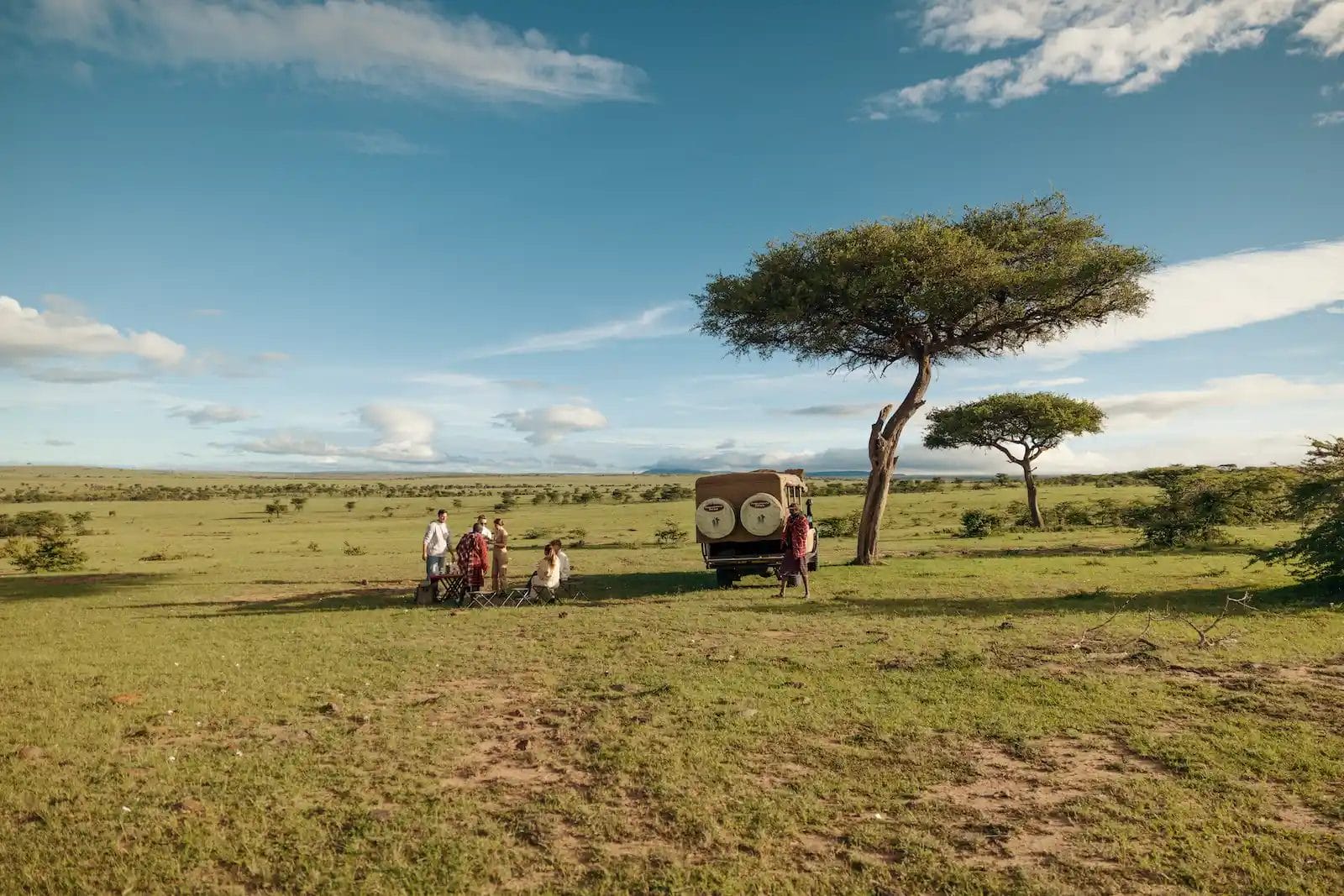
Bush breakfast from Porini Lion Camp in Olare Motorogi Conservancy in Kenya - photo credit Christian Ghammachi
A recent article published in The Seattle Times highlighted a significant change taking place across the African safari industry. The market is increasingly dividing between ultra-luxury lodges charging several thousand dollars per night and lower-cost, high-volume safaris at the other end of the spectrum. Between them, the traditional middle-priced safari is coming under growing pressure.
This is an important observation—but it risks presenting travellers with a false choice.
A safari should not have to be either extraordinarily expensive or inexpensive and crowded. There is a third path: a high-quality, low-density safari where guests pay for exceptional wildlife viewing, excellent guiding, authenticity and conservation impact rather than excessive physical luxury.
This is the model that Gamewatchers Safaris and Porini Camps have pursued for more than three decades—and one that we believe has an increasingly important role in the future of African tourism.
The phrase “middle market” can be misleading. It can suggest an experience that is somehow average: more comfortable than a budget safari but less memorable than an ultra-luxury one.
That is not how we see it.
Some of Africa’s most rewarding safaris take place in small, environmentally sensitive camps without gold taps, private plunge pools or elaborate spas. Their value comes from something far more difficult to manufacture:
– Space. – Silence. – Outstanding local guides. – Wild animals behaving naturally. – Time to stop, observe and understand. – A genuine connection with the landscape and the people who live there.
For many discerning travellers, these things represent a more meaningful form of luxury than the size of a suite or the length of a wine list.
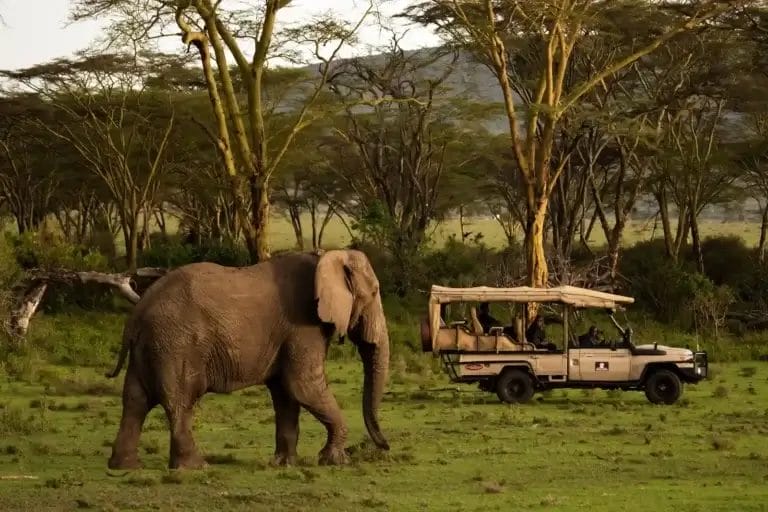
Elephant & safari vehicle in Ol Kinyei Conservancy Kenya I photo credit Wanderreds
A False Choice Between Opulence and Volume
Both luxury and budget safaris have legitimate places in the market. The problem arises when they become the only commercially viable options.
At one end, operators can justify the high cost of protecting remote wildlife areas by charging increasingly high rates and adding ever more elaborate facilities.
At the other, lower prices may depend upon moving greater numbers of visitors through the same destinations.
The danger is that one model can make an African safari unaffordable to many travellers, while the other can undermine the very sense of wilderness they have travelled to experience.
Neither extreme necessarily answers one of the most important questions facing African tourism:
How can a safari provide an exceptional guest experience while generating enough value to protect wildlife habitat and meaningfully benefit the communities who own or live alongside that land?
Kenya’s community conservancies provide one possible answer.
Giraffes at Porini Lion Camp - photo credit Julie Roggow
Why Community Conservancies Change the Equation
In a well-managed community conservancy, tourism is not simply taking place beside conservation. Tourism is one of the mechanisms that makes conservation financially possible.
Local landowners agree to manage their land in ways that allow wildlife habitat and traditional pastoralism to coexist. Tourism partners provide regular income, employment and other community benefits, while maintaining strict limits on the number of camps, rooms and vehicles operating within the area. The result is a different tourism economy.
Rather than trying to place as many guests as possible within a small area, the model seeks to generate greater value from fewer visitors across a much larger protected landscape.
At Porini, our long-standing benchmark has been approximately one guest room for every 700 acres of habitat. This means fewer vehicles (about 1 vehicle to 1400 acres), less pressure on the environment and more space for wildlife. It also gives guests the freedom to spend time at a sighting rather than competing with a queue of vehicles. The model has previously been recognised internationally as an example of low-impact tourism that transfers financial risk away from individual Maasai landowners and towards tourism operators. The conservancy experience also allows activities that are generally restricted within national parks and reserves, including night game drives, guided walks and off-road viewing. This is not luxury created by adding more. It is luxury created by protecting what is becoming increasingly scarce.
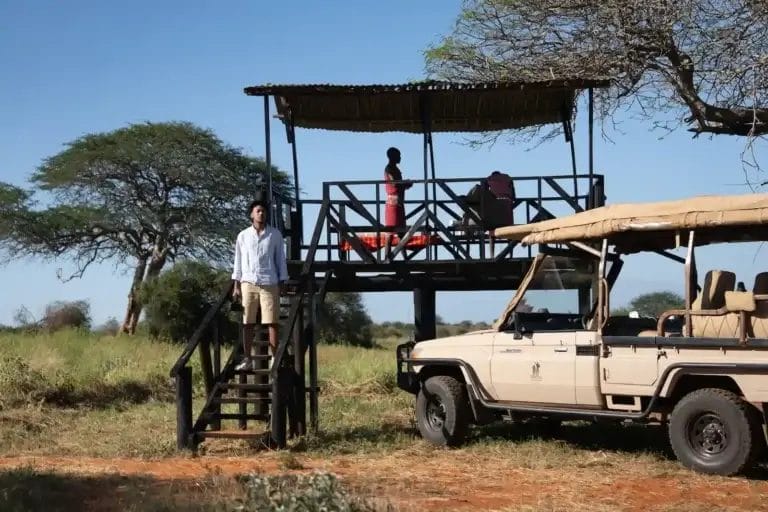
Safari Guide & guest standing on the viewpoint with a safari vehicle in Selenkay Conservancy in Kenya. Photo credit Rameez and Nabel
What Does a Safari Guest’s Money Actually Pay For?
When travellers compare safaris, they understandably begin with the price. But two safaris with similar headline rates can deliver very different experiences—and very different impacts.
One rate may largely cover accommodation and transport, with park fees, drinks, flights and activities added later.
Another may include these costs while also supporting conservancy leases, ranger teams, habitat management and payments to local landowners.
The most useful question is therefore not simply:
“How much does this safari cost?” It is: “What is my money helping to create?”
Across the community-conservancy model supported by Gamewatchers, tourism helps protect approximately 120,000 acres across six conservancies, benefiting more than 7,000 landowners and supporting over 300 jobs.
These are not charitable contributions added as an afterthought. They are part of the operating model.
The guest receives an uncrowded, high-quality safari, while tourism gives landowners a tangible economic incentive to retain open habitat for wildlife rather than converting it to other uses.
That alignment between the guest experience, community livelihoods and wildlife protection is what we call the triple bottom line: tourism must work for the visitor, the local community and the environment.
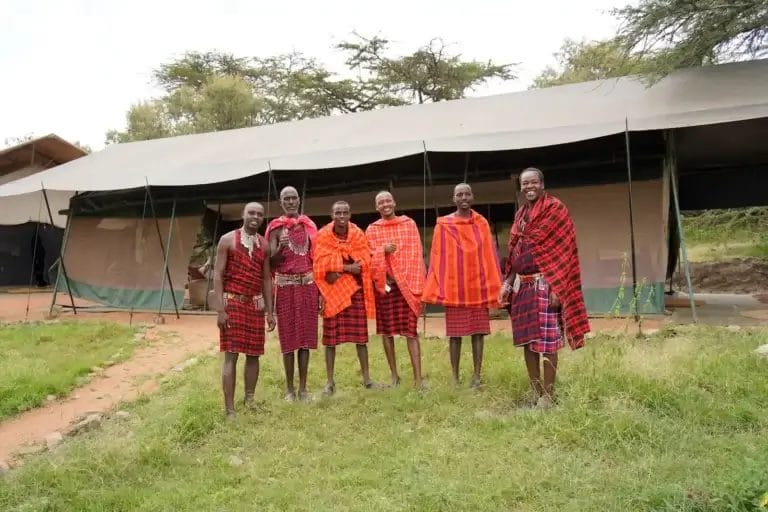
Maasai team from Porini Giraffe Camp in Ripoi Conservancy in Kenya - photo credit Travel TomTom
The Most Valuable Safari Assets Cannot Be Built
A lodge can add a larger room, a new swimming pool or a more elaborate menu. But it cannot manufacture a functioning ecosystem.
– It cannot instantly recreate a wildlife corridor that has been fenced or subdivided. – It cannot purchase decades of guiding knowledge. – It cannot guarantee an intimate lion sighting if too many vehicles are competing for the same space. – And it cannot create authenticity merely through décor.
The most valuable safari assets are the land, its wildlife, knowledgeable people and the time and space guests are given to experience them.
This is why we believe safari value should be judged through three lenses:
Experience value: How good are the wildlife viewing, guiding, service and overall journey?
Conservation value: Does the safari generate sufficient income to protect meaningful areas of habitat?
Community value:Are the people who own or live alongside the land actively involved in decision making and receive a fair and measurable benefit from tourism? Does the payments go directly to the landowner individuals to avoid elite capture and ensure protection of wildlife and ecosystems is felt at the household level?
A safari that performs strongly across all three dimensions may offer substantially greater value than one that is either cheaper or physically more luxurious.
Porini Mara Family tent in the Ol Kinyei Conservancy surrounded by nature. Photo credit Tomas Rodriguez
Continuing to Pioneer Beyond Kenya
Gamewatchers began working with Maasai communities to develop the conservancy model in Kenya in 1997. Since then, the concept has expanded across several important wildlife ecosystems and has demonstrated that community livelihoods, livestock and thriving wildlife populations do not have to be competing interests. Importantly there are over 5,000 households getting direct regular payments from Gamewatchers with this model.
We are now working to apply these lessons in Uganda through the Kidepo Lomej Conservancy, beside Kidepo Valley National Park.
The objective is not simply to open another safari property. It is to help develop a tourism-funded community conservancy in which local people have an enduring economic stake in protecting the surrounding habitat.
Kidepo is one of East Africa’s most dramatic and authentic wilderness areas. Yet communities around the park must receive meaningful benefits if its wildlife and wider ecosystem are to remain secure over the long term.
This conservancy follows the same essential philosophy as Porini: a small, high-quality camp; low visitor and vehicle densities; excellent guiding; authentic encounters; and tourism revenue linked to community livelihoods, direct payments and conservation.
It is intended to serve travellers seeking a high-quality safari without entering an escalating competition for ever more extravagant—and expensive—physical luxury.
This is how the “missing middle” can remain relevant: not by compromising on quality, but by directing investment towards the things that make a safari genuinely exceptional.
Scenery of Uganda
Questions Every Traveller Should Ask
Before choosing a safari, travellers should look beyond photographs of the rooms and ask:
– How many vehicles might be present at a wildlife sighting? – How many rooms and camps operate within the surrounding wildlife area? – Are local landowners receiving direct and reliable income from tourism? – Are conservancy or park fees included in the quoted price? – How experienced are the guides?- Can guests participate in night drives and guided walks? – Does the operator have a long-term responsibility for the habitat, or does it simply sell holidays there?
These questions reveal far more about the likely quality and impact of a safari than the thread count of the bed linen.
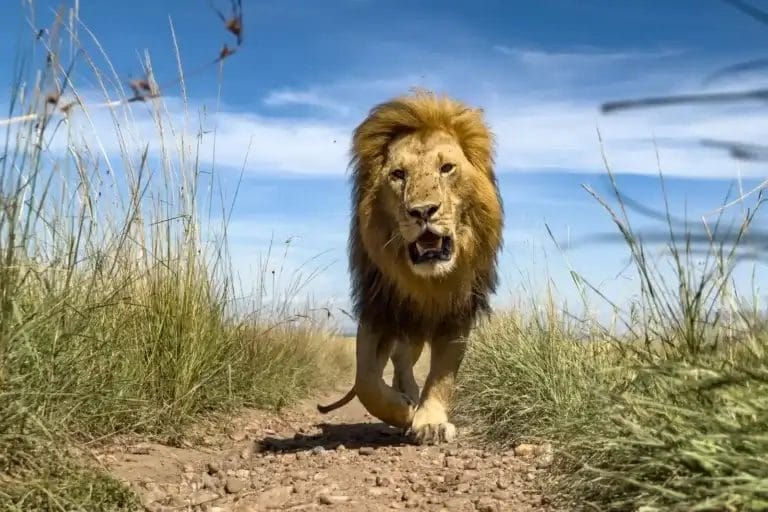
Male Lion walking towards the camera. Taken on safari at Porini Camps. Photo credit Siddharth Ramaswamy
A Third Future for the African Safari
The middle of the safari market is undoubtedly under pressure. Rising operating costs, increasing conservation fees and demand for ever more luxurious facilities are reshaping the industry.
But its disappearance is not inevitable.
The future of the African safari does not need to be a choice between extraordinarily expensive lodges and crowded, high-volume tourism.
A third model already exists:high-value, low-density, conservation-led travel.
It offers comfort without unnecessary excess, exclusivity without extravagance, authenticity without sacrificing quality and a direct connection between the traveller’s experience and the survival of the landscape they have come to see.
At Gamewatchers Safaris and Porini Camps, we believe the greatest luxury in Africa is not something that can be installed inside a room. It is having time and space in a thriving wilderness, guided by people who understand it, knowing that your presence is helping to keep it intact.
That is not the middle ground. It may be the most valuable safari of all.
Or if you’re still at the early stages of deciding where to go and what to do, just sign up to our free 6-part email course here and discover how to book the best safari and make the most of your time and budget.