A Tribute to Paolo, Amboseli’s Iconic Elephant

Wildlife

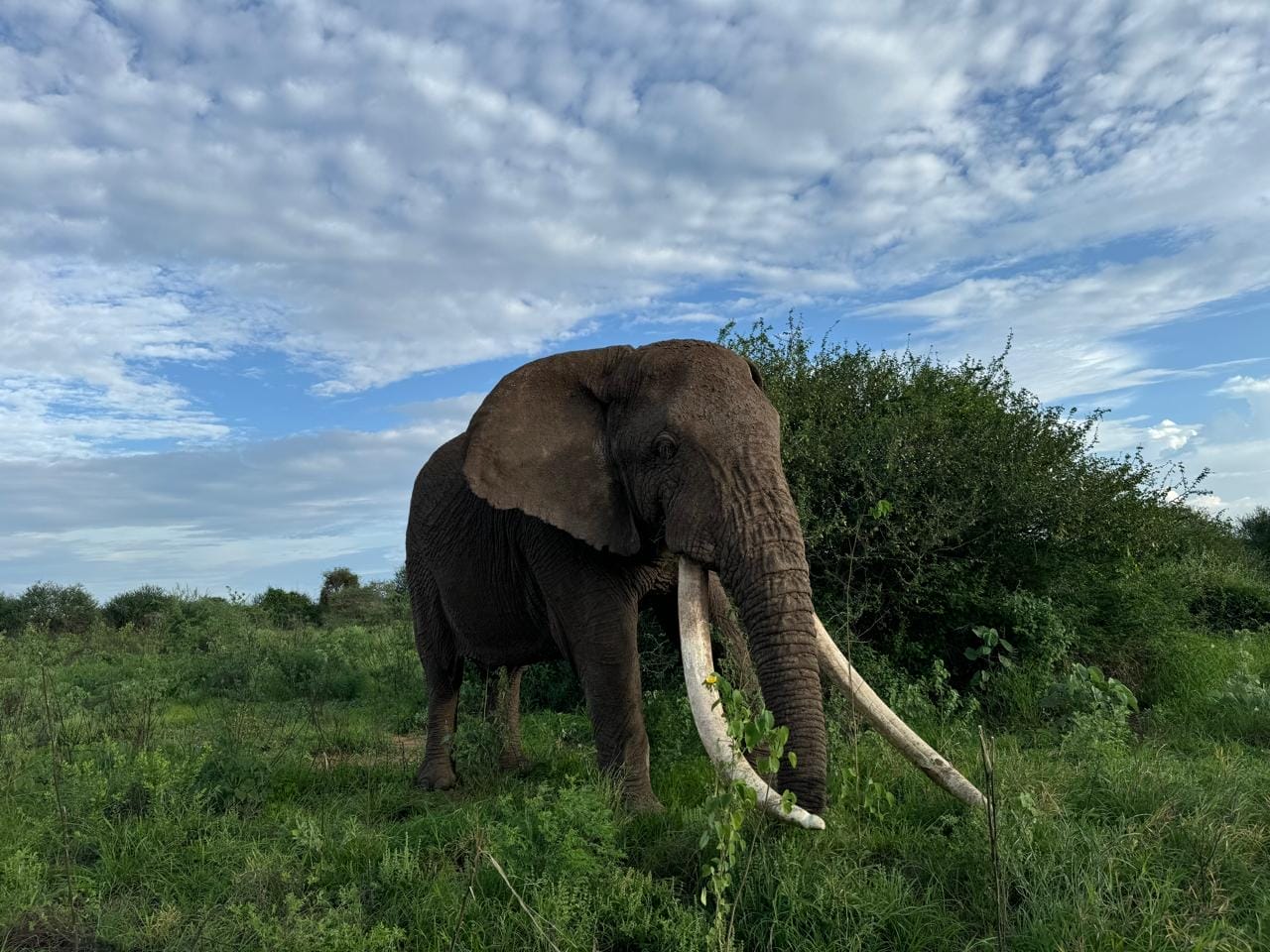
Paolo, captured through the lens of Porini Guide Edison Sakimba

A Tribute to Paolo, Amboseli’s Iconic Elephant

We are deeply saddened to announce the passing of Paolo, one of Amboseli’s most famous and cherished elephants. At 46 years old, Paolo’s death marks the loss of a true giant, not only in size but also in spirit. His massive tusks, each weighing over 100 pounds (45 kg), made him one of Africa’s last remaining super tuskers, and his presence will be sorely missed.

A Life Filled with Challenges and Triumphs

According to Amboseli Elephant Trust, Paolo was born in November 1979 and was part of the ‘P’ family, one of the largest elephant families in Amboseli. Under the care of his mother, Pick, Paolo survived early challenges, including a devastating drought in 1984. As Paolo grew older, he left his family at 14 years of age, following the natural path of male elephants to live independently.

Over the years, Paolo endured numerous hardships, including two poaching crises and a severe drought in 2008 that claimed the life of his mother. Despite these challenges, Paolo thrived, becoming one of Amboseli’s largest and most iconic elephants

Paolo, captured through the lens of Porini Guide Edison Sakimba

The Rare Super Tusker

Paolo was a magnificent bull known for his impressive tusks. Following his passing, the Kenya Wildlife Service (KWS) recorded measurements of Paolo’s tusks, confirming just how extraordinary they were.

Paolo’s Tusks: A Legacy in Numbers

🔹 Right Tusk

  • Weight: 52.9 kg
  • Outer Curve Length: 260 cm
  • Inner Curve Length: 234 cm
  • Circumference: 52 cm

🔹 Left Tusk

  • Weight: 51 kg
  • Outer Curve Length: 252 cm
  • Inner Curve Length: 227 cm
  • Circumference: 52 cm

These numbers highlight just how magnificent Paolo was—his tusks were not only long but also thick and symmetrical, marking him as a true ‘big tusker.’ 

Super tuskers like Paolo are becoming increasingly rare. The International Fund for Animal Welfare (IFAW) notes that fewer than 30 super tuskers remain worldwide – IFAW.ORG. with only approximately 10 residing within the Amboseli ecosystem – EnactAfrica.Org.  Paolo, however, was able to survive thanks to the tireless conservation efforts in the Amboseli ecosystem from the community, KWS, many conservation partners as well as the critical protected area that the Selenkay Conservancy is.

His presence in Amboseli and Selenkay Conservancy was a symbol of the success of community-based conservation. The local Maasai communities and dedicated rangers helped protect Paolo and other elephants, allowing them to live freely and safely.

 Selenkay Conservancy set up by Gamewatchers & Porini Camps in partnership with the community almost 30 years ago continues to be a vital part of the home range to some of these super tuskers and a great place to be able to view these majestic animals from while staying at Porini Amboseli Camp

Paolo’s Impact on Amboseli and Selenkay Conservancy

Paolo was not only an icon of Amboseli but also a frequent visitor to the Selenkay Conservancy. The conservancy, one of the most important wildlife areas in the region, has been a safe haven for elephants like Paolo. Our Porini Amboseli guides fondly remember him, sharing stories of his gentle nature and awe-inspiring presence.

“From the moment Paolo arrived here, he lived peacefully among both people and other elephants. He was easy to recognize by his folded right ear and his long, thick tusks, which stood tall above his shoulders. I knew him as a shy but calm elephant who preferred solitude most of the time. Despite this, he was a favorite among our guests, who traveled from far and wide to photograph him. His presence was a great attraction, and he embodied the beauty of Africa’s iconic big tuskers. Sadly, Paolo passed away when we still needed him. Though we couldn’t intervene, we believe he died of natural causes. Throughout his life, he was never in conflict with people—not even when near their farms. Paolo will be deeply missed, but his memory will live on in our hearts forever, ” says Selenkay Conservancy Manager, Daniel Mamai.

Paolo, captured in a stunning moment by Selenkay Conservancy Manager, Daniel Mamai.

“Paolo was often seen between Selenkay Conservancy and Amboseli National Park in the months leading up to his death. He was a friendly bull, and his presence was a symbol of strength and grace in our conservancy. As one of the iconic giants of Selenkay, Paolo was truly a living legend. His passing marks the loss of one of our biggest super tuskers, and it’s incredibly sad to lose such a peaceful and majestic patriarch. Paolo leaves a significant gap in Amboseli, and we can only hope that he has passed on his legacy through the next generation, ” adds Porini Amboseli Camp Silver Guide, Edison Sakimba who often photographed Paolo both in the Park and the Conservancy.

Check out this video of Paolo, captured by Sakimba in December 2024 at Selenkay Conservancy during a game drive with guests from Porini Amboseli Camp: https://www.facebook.com/share/v/1Azhqfwx9T/

“I’ve known Paolo for 10 years, and he became one of the best bull elephants in the Amboseli ecosystem. I always made it a point to track him down for my clients so they could have the chance to see him. He was a very friendly and intelligent elephant, who preferred to stay in Selenkay Conservancy for longer periods than in the park. Just last month, he came to Porini’s waterhole to say goodbye. His passing was due to natural causes, and no one is to blame. Rest in peace, Paolo! “ says Porini Amboseli Camp, Bronze Guide Daniel Muli.

Left to Right: Paolo, captured through the lens of Porini Guide Daniel Muli; Muli photographed with Paolo the elephant in Selenkay Conservancy

Though Paolo is gone, his legacy lives on in the work done to protect elephants and their habitats. His story is a reminder of the importance of sustainable conservation practices and the need to continue protecting these majestic creatures for future generations.

A Lasting Legacy

While we mourn the loss of Paolo, we also celebrate his life and the role he played in Amboseli’s elephant population. His sister, Periwinkle, continues to roam the savannah, carrying his memory forward. As you visit Porini Amboseli Camp, know that your support helps maintain the vital habitats that allow elephants like Paolo to thrive.

Rest in peace, Paolo. You will forever be remembered as one of Amboseli’s greatest giants.

— With gratitude from the team at Porini Amboseli Camp, Selenkay Conservancy and the entire Gamewatchers Safaris Team.

By Ivy Vuguza

Posted: 7th February, 2025

Namunyak’s Son Collared: Advancing Cheetah Conservation in the Mara

Wildlife

Namunyak’s Son Collared: Advancing Cheetah Conservation in the Maasai Mara

Olomunyak, now collared for conservation research, in Ol Kinyei Conservancy. Photo by Philip Salaash.

In an important event for cheetah conservation, Namunyak’s 15-month-old son has been collared in Ol Kinyei Conservancy. The young male, now named Olomunyak by the Rangers of Ol kinyei—meaning “Lucky One” in Maa—earned his name as the sole survivor of Namunyak’s litter of five cubs. As a first-time mother, Namunyak has shown remarkable resilience and care, successfully raising Olomunyak in a challenging environment.

A close-up of Olomunyak's collar being carefully fitted for conservation research. Photo by Simon Nkoitoi

Why Collaring Matters

According to Mara Predator Conservation Programme, the collaring of Olomunyak is part of a broader conservation effort to address two alarming trends in the Mara: the disappearance of dispersing male cheetahs and the decline in the population of breeding females.

Dispersing males, like Olomunyak, leave their mothers around 16 months to establish new territories. However, many vanish during this crucial period, and only a fraction of their groups are accounted for. Researchers believe this could be due to a lack of suitable habitat outside protected areas, pushing them into remote regions or community lands, where they face threats such as conflict and predation.

Collaring allows conservationists to track these young males, understand their movements, and work proactively to protect the habitats they rely on.

Olomunyak's eyes gently covered to keep him calm during the collaring process. Photo by Simon Nkoitoi

The Role of Namunyak

Namunyak’s journey as a first-time mother is a testament to her resilience and instincts. Successfully raising a cub in the wild is no small feat, especially when four of her five cubs were lost to the harsh realities of life in the savannah. Her dedication has ensured that Olomunyak reached dispersal age, giving him a strong start in life. Protecting breeding females like Namunyak is vital to securing the future of cheetah populations in the region.

Science and Safety in Action

The collaring of Olomunyak reflects a thoughtful and meticulous approach to conservation. Partnering with the Zambian Carnivore Programme, the Mara Predator Conservation team and the Kenya Wildlife Service ensures collars are safe and appropriate, especially for young males. Strict guidelines are followed: males must be at least 15 months old, and females with cubs are not collared to avoid additional stress.

For Olomunyak, the collar is more than a tracking device—it’s a symbol of hope and a tool to gather critical data. It will help conservationists identify key dispersal areas, reduce human-wildlife conflict, and provide insights into how young males navigate the challenges of independence.

The conservation team celebrates a successful collaring mission in Ol Kinyei Conservancy

The Bigger Picture

Namunyak and her son’s story is part of the ongoing effort to safeguard cheetahs in the Maasai Mara. Understanding their behavior and addressing the threats they face are crucial steps toward ensuring their long-term survival.

Conservancies like Ol Kinyei Conservancy (one of the few IUCN Green List Protected areas in Africa) play a critical role in providing safe habitat for Cheetahs and all this is supported by guests staying at the Porini Camps in Ol Kinyei Conservancy – Porini Mara Camp, Porini Cheetah Camp and the Ol Kinyei Safari Cottages. 

Special thanks go to the Mara Predator Conservation Programme, the rangers at Ol Kinyei Conservancy and the Kenya Wildlife Service Mobile Vet Unit for their dedication to making this collaring possible.

As Olomunyak embarks on his journey, his movements will not only shape his destiny but also contribute to the broader understanding and protection of cheetahs. His story reminds us of the delicate balance between humans and wildlife and the importance of continued efforts to protect these magnificent big cats.

By Ivy Vuguza

Posted on 22nd December 2024