





Why Conservancies Changed My Safari View
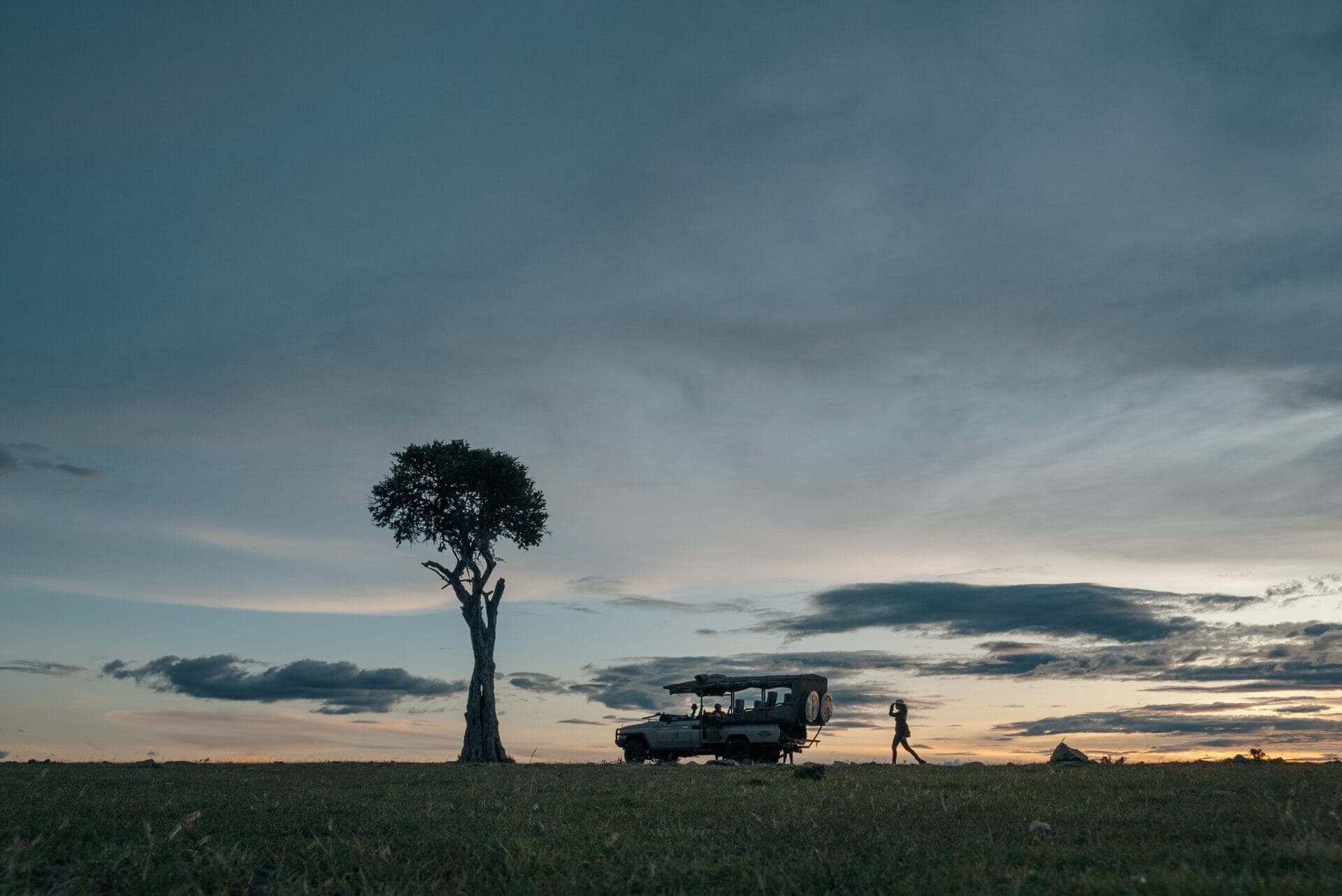
From Maasai Mara Reserve to Private Conservancy: How My Safari Perspective Changed
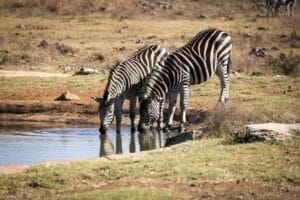
As the saying goes, familiarity breeds contempt. Growing up in Kenya, visiting our national parks felt like a routine part of school life. If you were a student taking Geography or Biology, there was a high chance you’d end up on a school bus headed for places like Lake Nakuru National Park, Lake Bogoria National Reserve, or Hell’s Gate. We also frequented the Nairobi Animal Orphanage and museums in Nairobi and Western Kenya. These were always day trips, and while we often saw animals like zebras, giraffes, and baboons — maybe a lion or two if we were lucky — the experience never really felt extraordinary.
And I think that’s true for many Kenyans. These trips were educational — part of the curriculum — not necessarily designed to spark wonder or offer deep engagement with wildlife. In a way, we overlooked the incredible richness of our backyard. It wasn’t until later in life that I truly began to appreciate Kenya’s wilderness.
My First Safari Experience
In 2019, while working as a journalist at one of Kenya’s local TV stations, I was invited on a media trip to the Maasai Mara National Reserve. We were a group of journalists from different media houses, and we were heading to Jambo Mara Safari Lodge, right in the heart of the Mara. The road was rough at the time — construction was underway — and we arrived at the lodge just before sunset.
The lodge was quiet, as it was low season, and we enjoyed a buffet dinner before being shown to our rooms. I shared a sleek glass-fronted suite with a colleague, but it was so cold at night we requested to be moved to a warmer wooden cabin the next day.
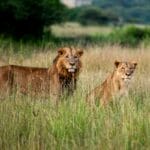
Our game drive started early the next morning. I remember wondering why we had to be up so early — until our guide explained that early morning is prime time to catch predators like lions when they’re still active. True to his word, we spotted a pair of lions on honeymoon not long after setting out.
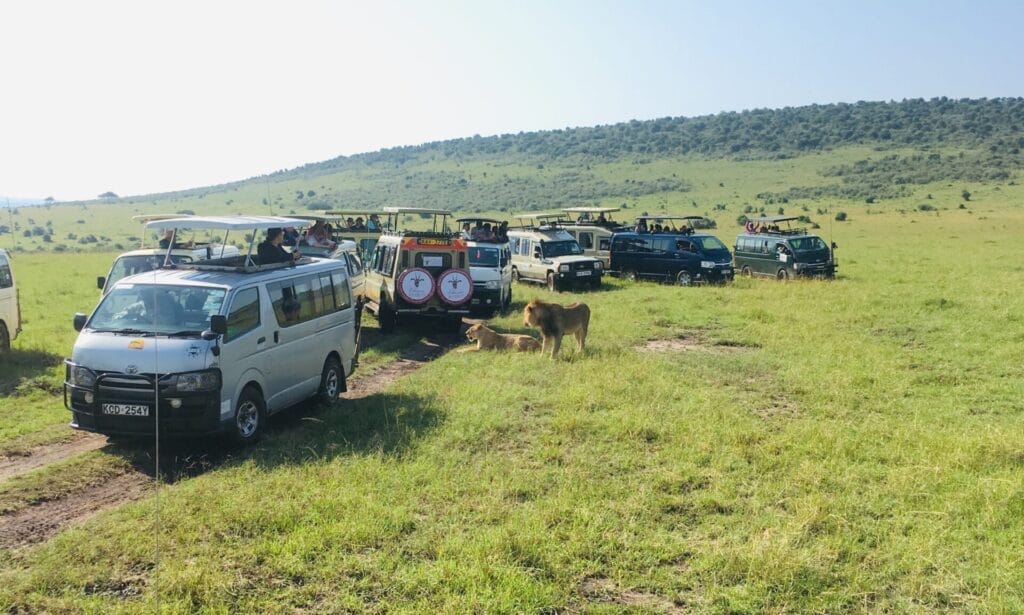
We spent most of the day inside the National Reserve, and although we saw cheetahs, giraffes, and antelopes, many of the sightings were from a distance. In the reserve, vehicles are required to stay on designated tracks. Going off-road is prohibited and carries heavy penalties — which means you can’t always get close to the wildlife.
There were also a lot of tourist vehicles at most sightings, and our driver had to carefully navigate the crowds while explaining how too many cars can stress the animals. Despite all that, I enjoyed the trip and learned so much from our guide — especially the difference between National Parks, Reserves, and Conservancies.
Enter Gamewatchers Safaris and the Conservancy Experience
Fast forward to 2022. I was in the middle of a career transition when I was invited on a trip with Gamewatchers Safaris to visit Ol Kinyei Conservancy — a private, community-owned wildlife sanctuary in the greater Mara ecosystem. This time, I was picked up from Nairobi by a professional driver-guide in a comfortable 4×4 safari vehicle — and I had it all to myself! The road was much improved, and we made it to the conservancy in about five hours.
From the moment we entered Ol Kinyei, I could tell this was going to be different. We hadn’t even reached the camp when I’d already spotted zebras, wildebeest, jackals, hyenas, and impalas — and not a single other safari vehicle in sight. I was welcomed warmly at Porini Cheetah Camp, a small, eco-friendly camp with just six guest tents. The camp has no permanent structures and is designed to leave no trace if removed — a true example of sustainable tourism. I was greeted by the camp manager, John Saleh, who offered me a refreshing drink and gave me a tour.

Just after settling in, our guide received a call: a lion collaring operation was underway nearby — did I want to go? Absolutely. I’d never seen a lion so close before. I filmed the entire experience (you can watch it below), and it was truly one of those once-in-a-lifetime safari moments.
Over the two nights I spent at Porini Cheetah Camp, I saw more wildlife than I could have imagined. And the differences between this and my earlier safari in the National Reserve were striking.
Why Conservancy Safaris Are a Game-Changer
- More Wildlife, Closer Encounters
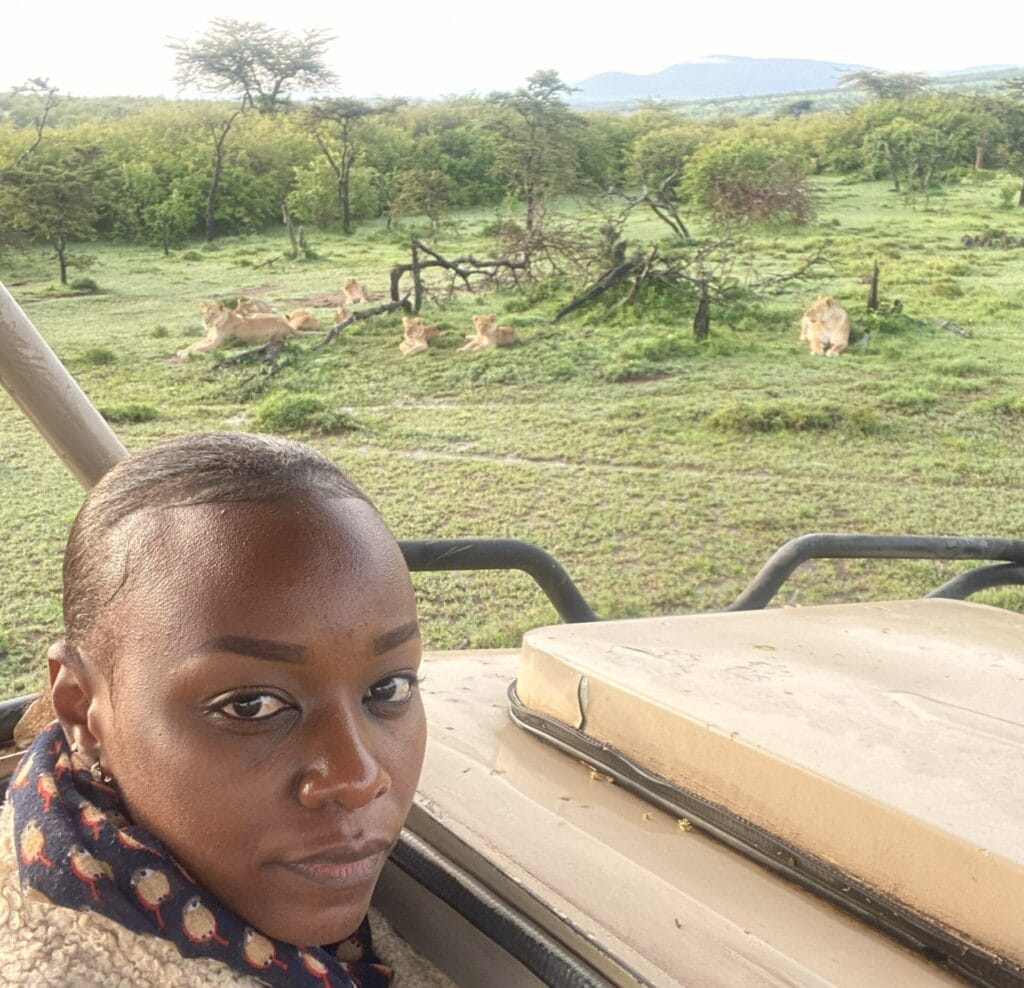
In conservancies like Ol Kinyei, vehicles are allowed to go off-road — which means you can follow a lion as it walks through the grass, or sit near a cheetah and observe without needing binoculars. During my visit, I saw a leopard for the first time — her name was Spot, a resident of the conservancy.
- Fewer Crowds, Ethical Viewing
One of the biggest perks of conservancies is the limited number of vehicles allowed at any sighting. In Ol Kinyei, no more than five vehicles can be at a sighting at any one time. If a sixth comes along, it must wait at a distance until another leaves. This prevents stress on the animals and makes for a more peaceful experience. Watch the short film below by Porini guest and wildlife filmmaker Mark Rowe, revealing how stress from safari encounters can impact wild animals.
- Night Game Drives & Guided Walks
Unlike National Parks, conservancies allow night game drives, giving you the rare chance to see nocturnal species and predators like leopards and lions when they’re most active. You can also go on guided bush walks, which are both thrilling and educational.
- Community-Owned, Conservation-Focused
Gamewatchers Safaris operates Porini Camps inside community-owned conservancies. This means that the local Maasai landowners directly benefit from conservation and tourism. They lease their land to the conservancy, receive regular income, and are involved in protecting the wildlife. It’s a win-win model that keeps wildlife safe while supporting local livelihoods.
- Small, Low-Impact Camps
Porini Camps are small and low-impact, with no concrete or loud activities. Everything runs on solar power, with generators used purely as a backup and waste is responsibly managed. The food is excellent, the staff are incredibly knowledgeable, and the focus is on authentic safari experiences, not luxury for the sake of luxury.
Final Thoughts
I left Ol Kinyei with a deep appreciation for what responsible, low-impact tourism can look like — and how much better the experience is for both guests and wildlife. The peace, the up-close encounters, the care taken to protect wildlife and empower communities — it all felt deeply intentional.
Years later, I now work with Gamewatchers Safaris, and having been on over a dozen safaris across their Porini Camps — from Amboseli to Ol Pejeta and deep in the Mara — I can say from both personal and professional experience: nothing compares to a safari in a private conservancy.
It’s not just about seeing wildlife. It’s about how you see it — with respect, with space, and with purpose. If you’re planning a trip to Kenya and want an unforgettable, wildlife-rich, and ethically sound safari, choose a place where your presence makes a real difference — to nature, to people, and to the future of conservation.
Go Porini.
Ready to experience the Mara without the crowds? Explore our eco-camps and award-winning conservancies at https://www.porini.com/african-safari-holidays/kenya/porini-camps/
By Ivy Vuguza
Posted on 8th August 2025