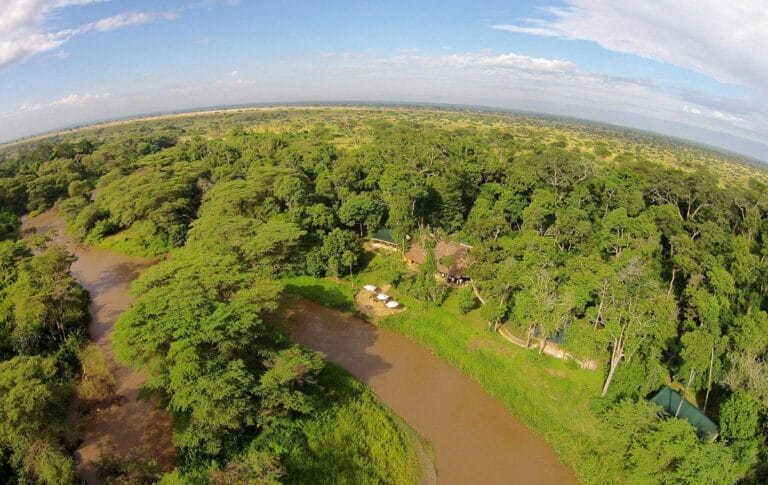
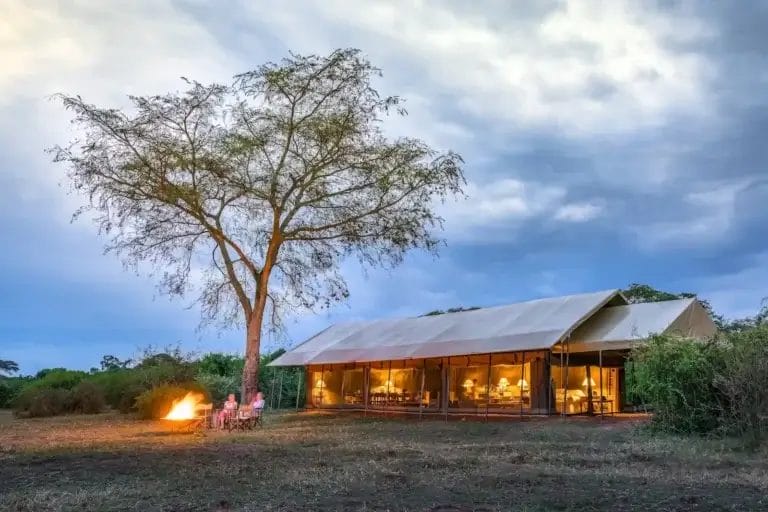
Queen Elizabeth National Park – set in Uganda’s South-East region – is the country’s most popular reserve as it has a variety of terrain. Its volcanic craters, open savannah plains, forest, rivers and Lakeland provide diverse habitats which attract a plethora of animals.
It also boasts an impressive 606 recorded species of bird – more than any other park in Africa.
Read More
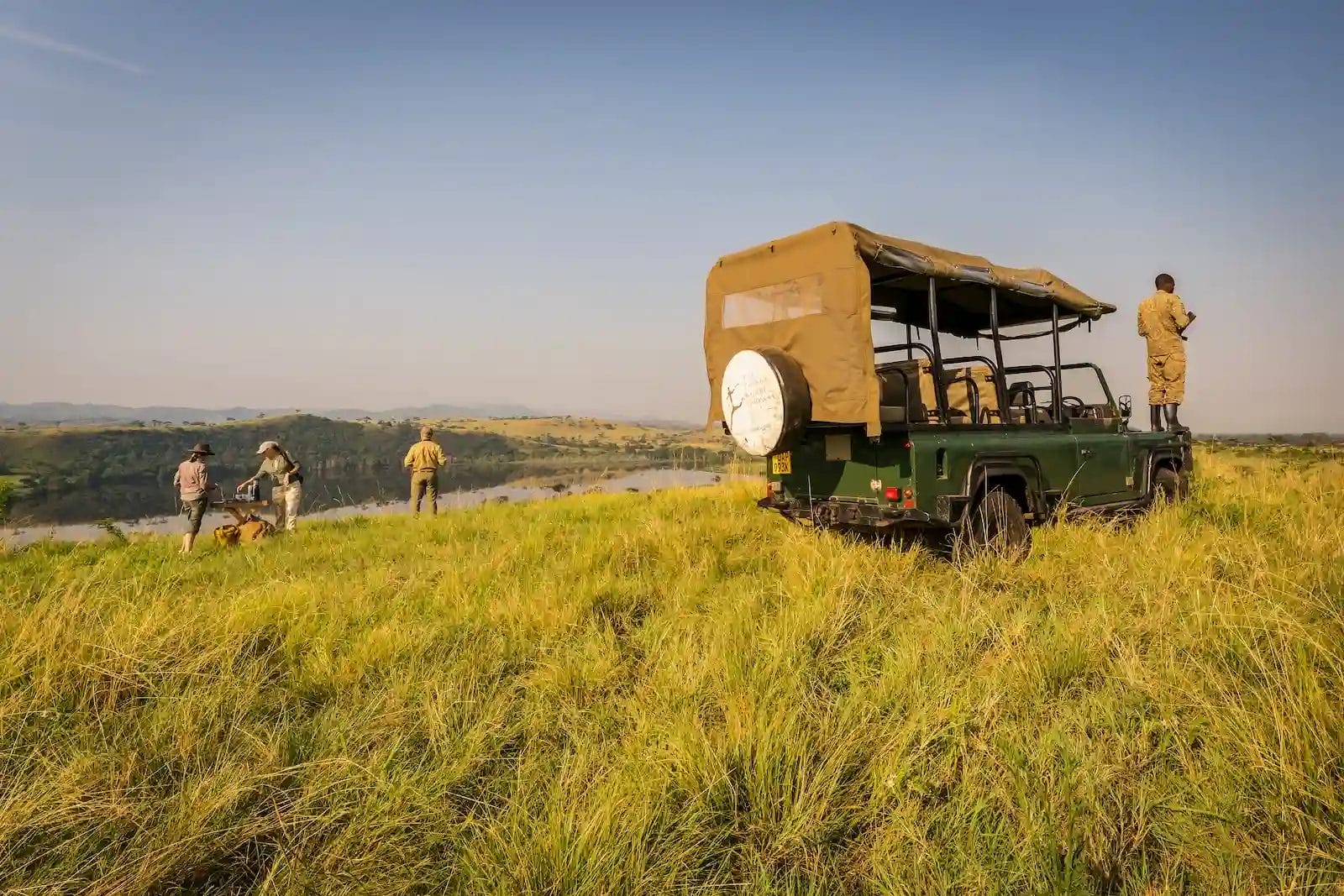
Of all Uganda’s National Parks, this area has the greatest number of mammal species. The savannah gives a taste of classic Africa game viewing – with various antelope, lion and spotted hyena as well as warthog and mongoose.
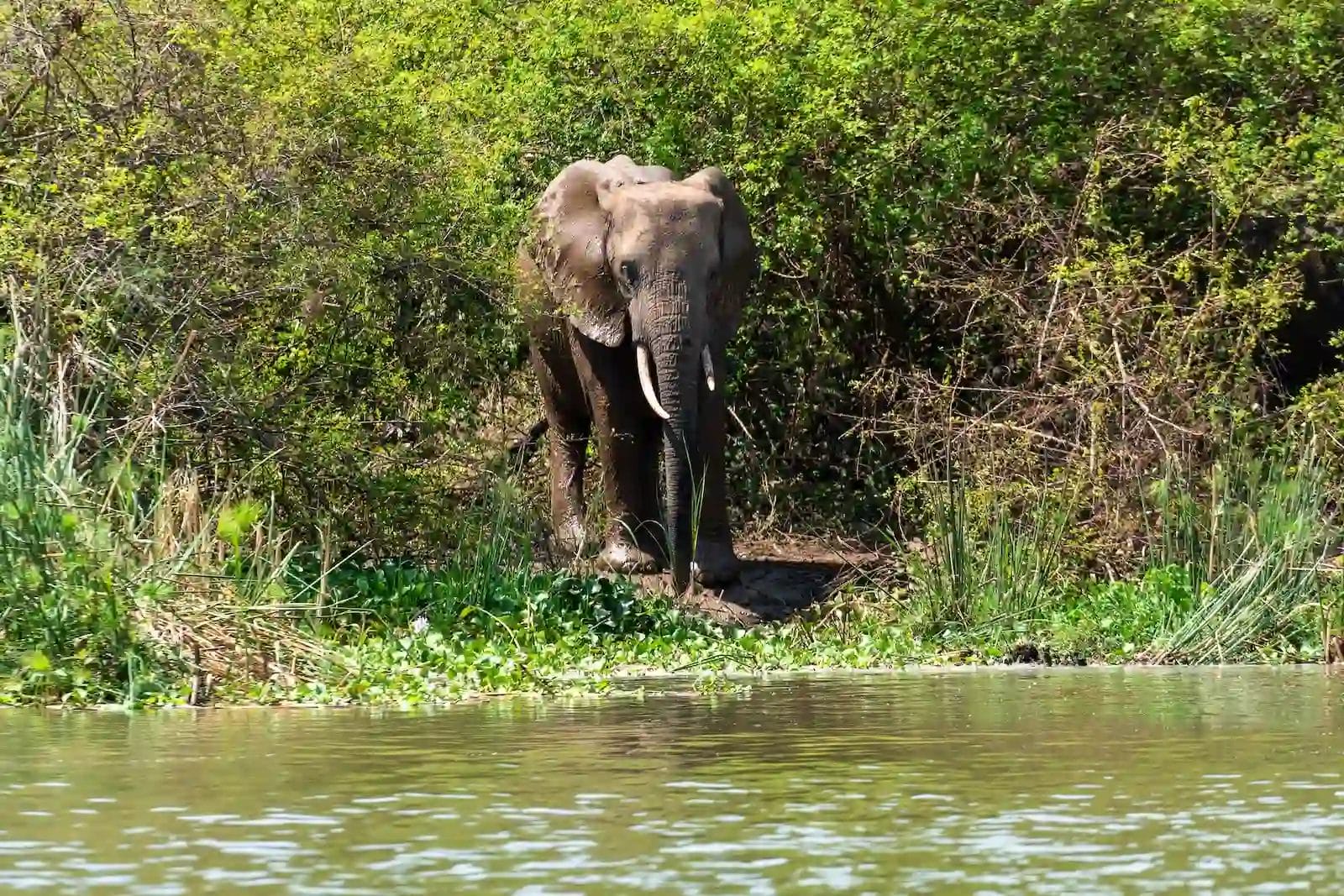
A highlight is the Kazinga channel where visitors can view game by boat, viewing hippos and crocodiles as well as elephant, buffalo and Big Cats when they come to drink at the water’s edge.
The forested areas and Ishasha are home to chimpanzees and various species of monkey including black and white colobus, baboons, red-tailed monkeys and vervet monkeys. Hyena and leopard are evident as are large prides of lion – including the famous tree-climbing lions.
Our experienced Safari Consultants—based in Nairobi and around the world—are here to guide you every step of the way. From expert advice to seamless planning, we’ll take care of every detail to create a safari that’s perfectly tailored to you.
Get in touch today, and a dedicated Safari Specialist in your time zone will start crafting your personalised safari to Africa.
Kenya
North America & Canada
North America & Canada
North America
UK & Europe
South America
Australia
India
Kenya
Head Office in Nairobi
We have an experienced team of Safari Consultants based in Kenya.
Hello, I’m Rick, based in Ontario, Canada, with over 15 years in the travel industry and a passport filled with stamps from over 70 countries. My heart was captured by Africa during my first visit to Kenya, and since then, I’ve journeyed back repeatedly, exploring the diverse landscapes and wildlife of Kenya, Tanzania, Rwanda, Zambia, Zimbabwe, Botswana, Namibia, and South Africa. Whether you’re dreaming of a “once in a lifetime” vacation or you’re a seasoned safari traveler, I’m here to assist in planning your perfect African adventure.
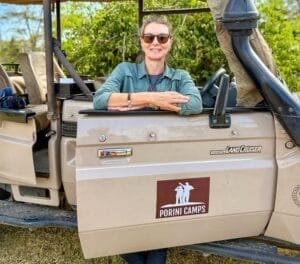
Hi, I’m Rae, based on the West Coast of Canada, on beautiful Vancouver Island. I’m a passionate traveler who has explored nearly 30 countries, but it was a solo journey to Africa that truly transformed my perspective. From the moment I arrived in Botswana, I felt an undeniable connection to the continent and was inspired to spend more time experiencing its extraordinary wildlife, breathtaking landscapes, and rich cultures. My solo travels have since taken me through Zimbabwe, Zambia, Mauritius, South Africa, Uganda, Namibia, and Kenya, where I experienced Gamewatchers Safaris and Porini Camps firsthand. It was during these immersive and unforgettable journeys that my passion for Africa evolved into a clear vision: to join the Gamewatchers team and help others discover the magic of safari. I’d love to connect and plan your wildest dreams!.
Greetings, I’m Julie Roggow, and I come to you with over two decades of immersion in the world of travel. My journey into the heart of safari adventures began as I traversed Kenya, Uganda, Tanzania, Rwanda, Botswana, Zimbabwe, and South Africa, capturing the essence of these mesmerizing landscapes through my lens. Among these remarkable destinations, Kenya and the Porini safari camps hold a special place in my heart. Their unique blend of wilderness and conservation resonates deeply with me. My passion for travel is matched only by my dedication to sharing that passion with others. Whether you’re a seasoned traveler or embarking on your very first safari, I’m here to ensure that planning your safari vacation is an enjoyable and seamless experience.
Feel free to reach out to me by email at julie@gamewatchers.com or through our toll-free telephone line at +1-877-710-3014. Let’s embark on an unforgettable safari journey together, where the wild beauty of Africa awaits to enchant and inspire you.
UK & Europe
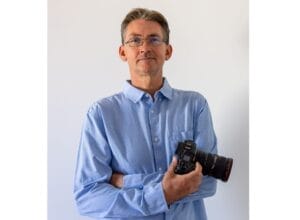
Tom Mees
Jambo, I’m Tommy Mees, most people call me Tom.
My connection with Africa began through years of travelling across the continent. I later spent more than twelve years managing safari camps and lodges while supporting conservation initiatives including beekeeping and tree-planting projects.
Having travelled extensively throughout Eastern and Southern Africa, I developed a deep appreciation for authentic wilderness experiences and the conservation-focused approach of the Porini Camps. I am originally from Belgium and now based in Spain, though my heart has always remained in Africa.
Alongside my safari background, I am also a professional photographer and enjoy helping travellers experience and capture the extraordinary wildlife, landscapes and cultures that make Africa so special.
If you are considering an African safari, feel free to contact me at tom@gamewatchers.com
South America
Andrea Landaeta
Hola, I’m Andrea and my love affair with the captivating world of safaris began during my teenage years when I embarked on my very first safari in Kenya. There, amidst the awe-inspiring wildlife and expansive plains, I found my true passion. Over the years, Kenya has called me back time and time again, leading me to explore its myriad camps, conservancies, and renowned parks. More recently, I’ve had the privilege of staying at all the Porini Camps, where the spotlight shines on wildlife conservation—a cause close to my heart as I traverse the globe. While Kenya holds a special place in my wanderlust-filled heart, Tanzania, Uganda, and Rwanda have also woven their magic into my soul.
If you’re eager to embark on your own safari adventure or share your passion for conservation, please feel free to contact me at andrea@saririterra.com
Australia
Kristy Thomson
Hello, I’m Kristy, your Australian-based Safari Advisor with Gamewatchers Safaris and Porini Camps. My background in ecology and conservation management, combined with a deep passion for nature and the great outdoors, led me to Kenya where I instantly fell in love with its spectacular wildlife and warm-hearted people. Having spent significant time at our Porini Camps and explored other camps we offer, I bring intricate knowledge to help craft your ultimate wildlife safari adventure. Whether you’re seeking the thrill of the savannah or the serenity of the wilderness, I’m here to make your safari dreams a reality.
Hello, I’m Pranay Chandra, a veteran of the Indian Armed Forces whose profound passion for nature and wildlife led me to the world of wildlife photography. My lens has captured the essence of the wild, earning recognition in esteemed competitions like the Sanctuary Asia annual wildlife awards and the Natural History Museum’s Wildlife Photographer of the Year awards. Beyond photography, I’ve dedicated myself to conservation efforts, collaborating with Ecological Task Forces and supporting WWF India’s training initiatives in tiger reserves. In the realm of education, I’ve partnered with CEC, New Delhi, to create informative video programs on Human-Wildlife Conflicts. I’ve ventured to Kenya, embracing the splendours of Africa while staying at Porini camps and other renowned lodges.
Queen Elizabeth National Park is located in western Uganda, between Lake George and Lake Edward, and forms part of the larger Albertine Rift Valley ecosystem.
What is Queen Elizabeth National Park known for?
The park is known for its diverse ecosystems, including savannah, wetlands, crater lakes, and forest, as well as its wide range of wildlife. It is particularly known for boat safaris along the Kazinga Channel and for its population of tree-climbing lions in the Ishasha sector.
What wildlife can you see in Queen Elizabeth National Park?
Visitors can see elephants, buffalo, hippos, Uganda kob, warthogs, and a wide variety of birdlife. Predators such as lions and leopards are also present, and chimpanzees can be tracked in the Kyambura Gorge.
What activities are available in Queen Elizabeth National Park?
Activities include game drives, boat cruises on the Kazinga Channel, chimpanzee tracking in Kyambura Gorge, guided walking safaris, and birdwatching.
When is the best time to visit Queen Elizabeth National Park?
The park can be visited year-round, but the dry seasons (January to March and June to September) are generally best for wildlife viewing, as animals gather around water sources and vegetation is less dense.
What makes the Kazinga Channel special?
The Kazinga Channel connects Lake George and Lake Edward and is one of the most wildlife-rich waterways in Africa, known for its large concentrations of hippos, elephants, buffalo, and waterbirds.
Is Queen Elizabeth National Park good for birdwatching?
Yes, the park is one of Uganda’s top birding destinations, with over 600 recorded species, including pelicans, kingfishers, fish eagles, and storks.
How do you get to Queen Elizabeth National Park?
The park can be accessed by road from Kampala (approximately 6–7 hours) or by scheduled or charter flights to nearby airstrips such as Mweya or Kasese.